
Travel to South Australia contains affiliate links and is a member of the Amazon Services LLC Associates Program. If you make a purchase using one of these Amazon links, we may receive compensation at no extra cost to you. See our Disclosure Policy for more information.
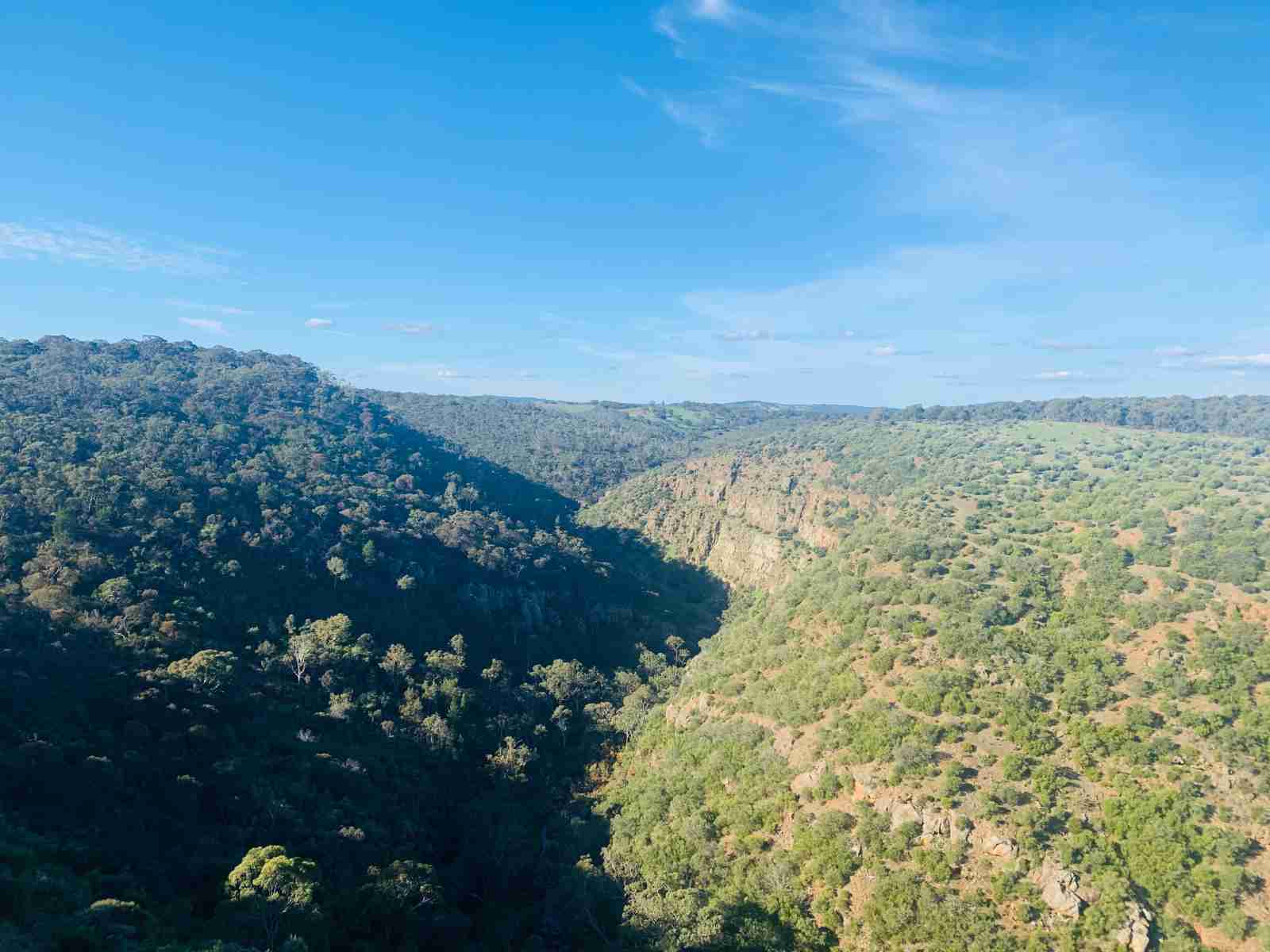
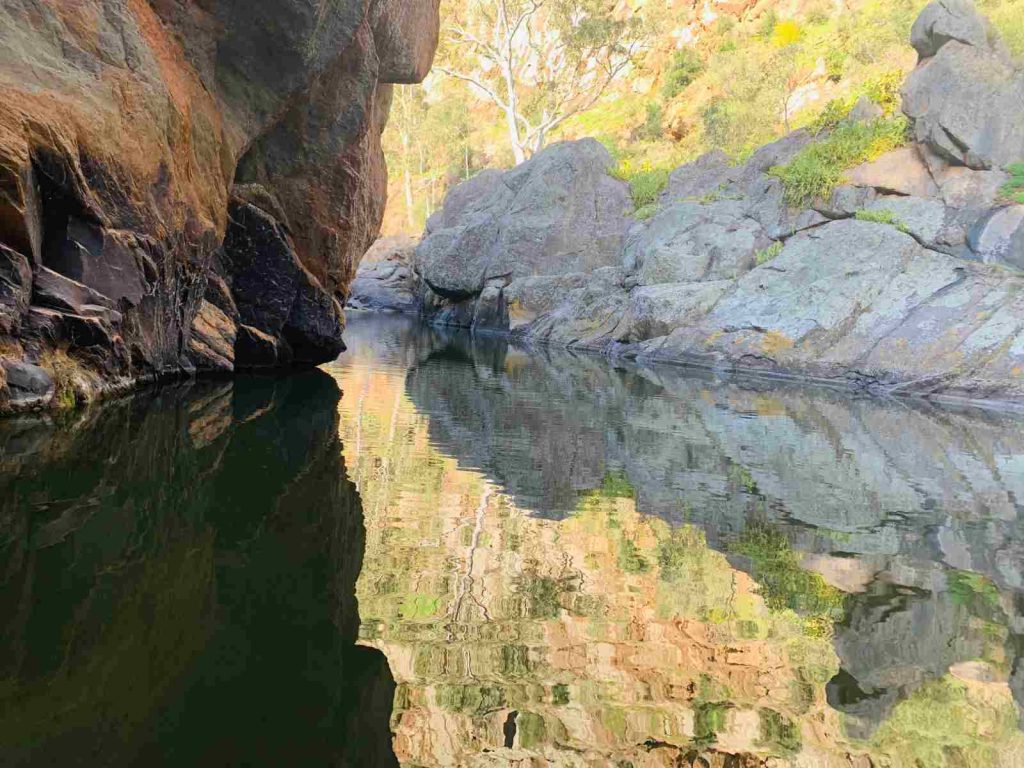
The Punchbowl Waterhole Track takes you deep into Onkaparinga Gorge, leading to a hidden rock pool known as “the Punchbowl.”
It’s only about 35 km south of Adelaide, but once you’re there, it feels like another world with rugged cliffs, quiet bushland, and clear pools that hold life year-round.
The walk starts from Piggott Range Road at Onkaparinga Hills and winds its way through grey box woodland before dropping into the valley.
When I took this walk, the first stretch felt steady and easy to follow, but as you approach the waterhole, the track becomes trickier.
The ground was slippery in parts, especially heading down towards the pool, and even more so after rain when the soil was damp.
It’s worth taking your time on this section, but reaching the Punchbowl makes it all worthwhile—the calm water and sheer cliffs make it a spot that feels tucked away and special.
Difficulty, Length & Duration
This is a moderately challenging hike. The trail involves a steep, rocky descent to the waterhole, so sturdy footwear and care are essential.

(By comparison, the 6 km Punchbowl Link loop is graded Moderate and takes ~2½ hours; the direct out-and-back to the Punchbowl Waterhole is shorter but steeper.)
A round trip to the waterhole is approximately 3–4 km; allow roughly 1–2 hours for the hike, depending on your pace and breaks. The track is unsealed and uneven in places, so expect an undulating, partly narrow path.
Access & Directions
- By car: Take Main South (B33) or Southern Expressway (M2) from Adelaide toward Onkaparinga. Turn onto Piggott Range Road in the Onkaparinga Hills (north side of the gorge).
The Punchbowl Lookout car park (off Piggott Range Rd) and the Sundews car park (Gate 11 on Piggott Range Rd) serve as trailheads. The Sundews Car Park (at Gate 11) has a bitumen surface, accessible parking and new toilets. The Punchbowl Lookout Car Park (near Gates 8–9) leads to the latest accessible lookout trail. - Parking: Sundews Car Park is signed on Piggott Range Road and provides the main parking/toilet facilities. (The smaller Gate 9 car park is adjacent to the accessible lookout trail.)
- Public Transport: Adelaide Metro buses and trains reach the Noarlunga/Seaford area. From the city centre, there are buses into the Onkaparinga Hills district – check Adelaide Metro routes for stops near Piggott Range Road.
Facilities at Sundews Car Park (Piggott Range Rd, Gate 11): sealed parking and an accessible toilet support trail access to Punchbowl and Punchbowl Lookout.
Facilities
- Toilets: The only toilets near this track are at the Sundews Car Park (accessible, including an accessible stall). Pink Gum Campground (east end of park) also has toilets, but is for campers only.
- Picnics: There are picnic tables/benches at the Punchbowl Lookout viewing platform (a short side walk from the road). Hikers often picnic on flat rocks by the water. No drinking water or refill stations are available; therefore, please carry sufficient water.
- Shelter/BBQ: No official shelters or BBQs on this track. The nearest formal picnic ground is located at Gate 25 (Chapel Hill), which is far to the south.
- Accessibility: The Punchbowl Lookout trail is wheelchair- and pram-friendly, but the descent to the waterhole is rugged and not suitable for strollers or wheelchairs.
Best Time to Visit
- Seasons: Late spring through autumn (roughly October–April) is ideal. By late spring, the river shrinks into a series of pools, filling the Punchbowl with water. Spring also brings an abundance of wildflowers and a wealth of active wildlife. In summer, be mindful of the heat; start early or late in the day. The park is open year-round, but it is closed on days of extreme or catastrophic fire danger (check the CFS fire bans).
- Time of day: Early morning or late afternoon offers cooler temperatures and better light. Wildlife (kangaroos, birds of prey, etc.) is often more active at dawn/dusk. Midday can be very hot and lead to glare at the waterhole.
Scenery & Wildlife Highlights

- Punchbowl Waterhole: A clear rock pool nestled at the gorge’s bottom. The adjacent cliffs and red-gum trees make it a photogenic spot, especially after rain.
- Views: The trail and lookout give panoramic views of Onkaparinga Gorge. From the Punchbowl Lookout (2 km from the car park), you can see the Punchbowl below and sweeping ridgelines.
- Vegetation: The walk is through native eucalypt woodland (grey box, sheoaks, stringybark). In spring, the understory and creeklines bloom with wildflowers.
- Wildlife: Common sightings include red kangaroos grazing near dawn/dusk, as well as birds such as pink-gaped honeyeaters, rosellas, or wrens.
The lookout areas are prime for raptors and cockatoos – yellow-tailed black cockatoos, peregrine falcons and wedge-tailed eagles are often seen riding the thermals above the gorge.
Keep an eye out for koalas and echidnas in the trees and leaf litter. The waterhole may harbour frogs and native fish (mudeyes) in warmer months.
The Punchbowl Lookout Trail passes through shady native woodland with rock outcrops. Hikers enjoy ridge-top vistas into the Onkaparinga Gorge (trail opened 2017).
Safety & Visitor Tips

- Terrain: The descent to the waterhole is quite steep and can be slippery when wet. Wear sturdy shoes with a good grip. Use handholds on rocks or roots when available. Descend slowly and deliberately.
- Water & sun: No drinking water on the track – carry all you need (at least 1–2 L per person). The gorge can be hot in the sun, so wear a hat, sunscreen and consider a walking stick.
- Swimming: If you enter the waterhole, use extreme caution – there are no lifeguards or safety equipment. The pool is deep and can be cold; slippery algae or jagged rocks may be present on the bottom. Children should be supervised closely.
- Weather & fire: Do not use the track when heavy rain has fallen (rockslides and flash flooding are possible). In summer, avoid extreme heat or severe weather. The park is closed on catastrophic or extreme fire-danger days – check alerts before heading out.
- Navigation: The track to the waterhole is unmarked; stay on the worn path and return by the same route. Mobile reception can be unreliable. Tell someone your plans before hiking alone, or go with a companion.
- Park rules: Pets are not allowed in the national park. (Only trained assistance dogs are permitted with prior clearance.) Drones, fires and off-track walking are banned. Leave no trace: carry out all rubbish and refrain from removing plants or rocks.
Entry Fees & Permits
- Day entry: Free. There is no general vehicle entry fee. No permit is required for casual day hikes.
- Camping: Fees apply only for camping accommodations. Pink Gum Campground costs around $38.50 per night (booked in advance); however, day visitors do not incur this fee.
- Passes: A Parks SA multi-entry pass is not required unless you plan to stay overnight. No additional permits are needed for this track
