
Travel to South Australia contains affiliate links and is a member of the Amazon Services LLC Associates Program. If you make a purchase using one of these Amazon links, we may receive compensation at no extra cost to you. See our Disclosure Policy for more information.
Adelaide is one of those cities that reveals more the longer you spend in it — and after years of exploring it with my kids,
I still find new things to add to the list. This guide covers the things to do in Adelaide that are genuinely worth the time, from free CBD attractions and family days out to wine region day trips and seasonal events that most visitors don’t plan around.
Adelaide Central Market
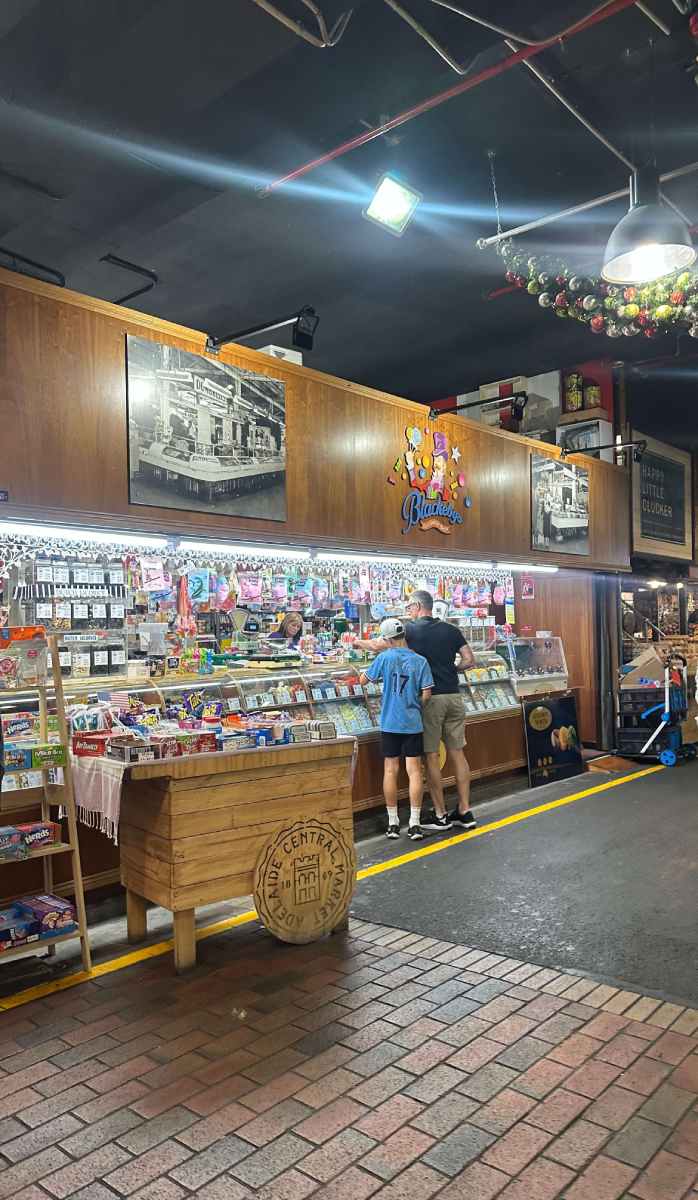
The Central Market on Gouger Street is the best starting point for any visit to Adelaide.
It’s one of the largest undercover fresh produce markets in the Southern Hemisphere — over 70 traders, open Tuesday to Saturday. The energy on a Friday morning is something else.
The produce is the draw, but the food is what keeps people coming back. Dough does good pastries, Lucia’s Fine Foods has been here since 1957, Angelakis Bros handles the seafood, and the Smelly Cheese Co does exactly what the name suggests.
If you’re heading to the Botanic Garden or Torrens for a picnic later in the day, this is the place to stock up.
On a recent visit, I came specifically for the Dubai chocolate — the pistachio-filled bar that’s been everywhere lately. Found it at one of the speciality food stalls for $30, which isn’t cheap but worth trying once.
The fruit and veg are genuinely better value than the supermarket, which I didn’t expect the first time I stocked up here.
Wandering the market is free. Budget $20–$40 if you’re actually buying.
Check hours at adelaidecentralmarket.com.au before you go — the market is closed Sundays and Mondays.
Gouger Street and Adelaide’s Dining Precincts
Right outside the Central Market, Gouger Street is Adelaide’s most concentrated dining strip — the two are an easy pairing.
The range runs from yum cha and Vietnamese on Moonta Street (Adelaide’s small Chinatown, which runs off Gouger) through to steakhouses and long-lunch spots. It’s not the flashiest precinct in the city, but it’s the one locals actually use.
Hutt Street in the south suburbs (about 10 minutes from the CBD) has a strong café culture and works well for breakfast or brunch. O’Connell Street in North Adelaide is the other one worth knowing — good pub dining, wine bars, and a short walk from Adelaide Oval.
Adelaide Botanic Garden
Fifty hectares of garden sit right on North Terrace, and it’s free to enter.
The Botanic Garden is the kind of place locals walk through on a Tuesday without thinking twice about it, but visitors consistently underestimate how good it is.
There are 11 distinct garden areas, including the International Rose Garden, the Dahlia Garden, and the Bicentennial Conservatory — the largest single-span glasshouse in the Southern Hemisphere, housing a tropical rainforest under glass.
Free guided walks depart daily at 10:30 am from the Schomburgk Pavilion Visitor Information Centre.
Best time — September to November, when the gardens are at their peak.
The Mortlock Chamber
This one flies under the radar for visitors, and it shouldn’t.
The Mortlock Chamber is inside the State Library of South Australia on North Terrace — a grand Victorian library hall with a glass-domed lantern roof, wrought-iron balustraded balconies, and a marvellous clock sitting above it all.
It’s consistently voted one of the most beautiful libraries in the world, and entry is free.
Free ambassador-led tours run most weekdays at 11 am and on Mondays and Thursdays at 2 pm. The chamber also hosts pop-up bars and events — check slsa.sa.gov.au for what’s on.
Also inside the State Library complex is the Centre of Democracy — a free museum covering the history of democracy in South Australia, which was the first place in the world to give women the right to stand for parliament.
Worth 30–45 minutes if you’re already in the building.
Art Gallery of South Australia + South Australian Museum
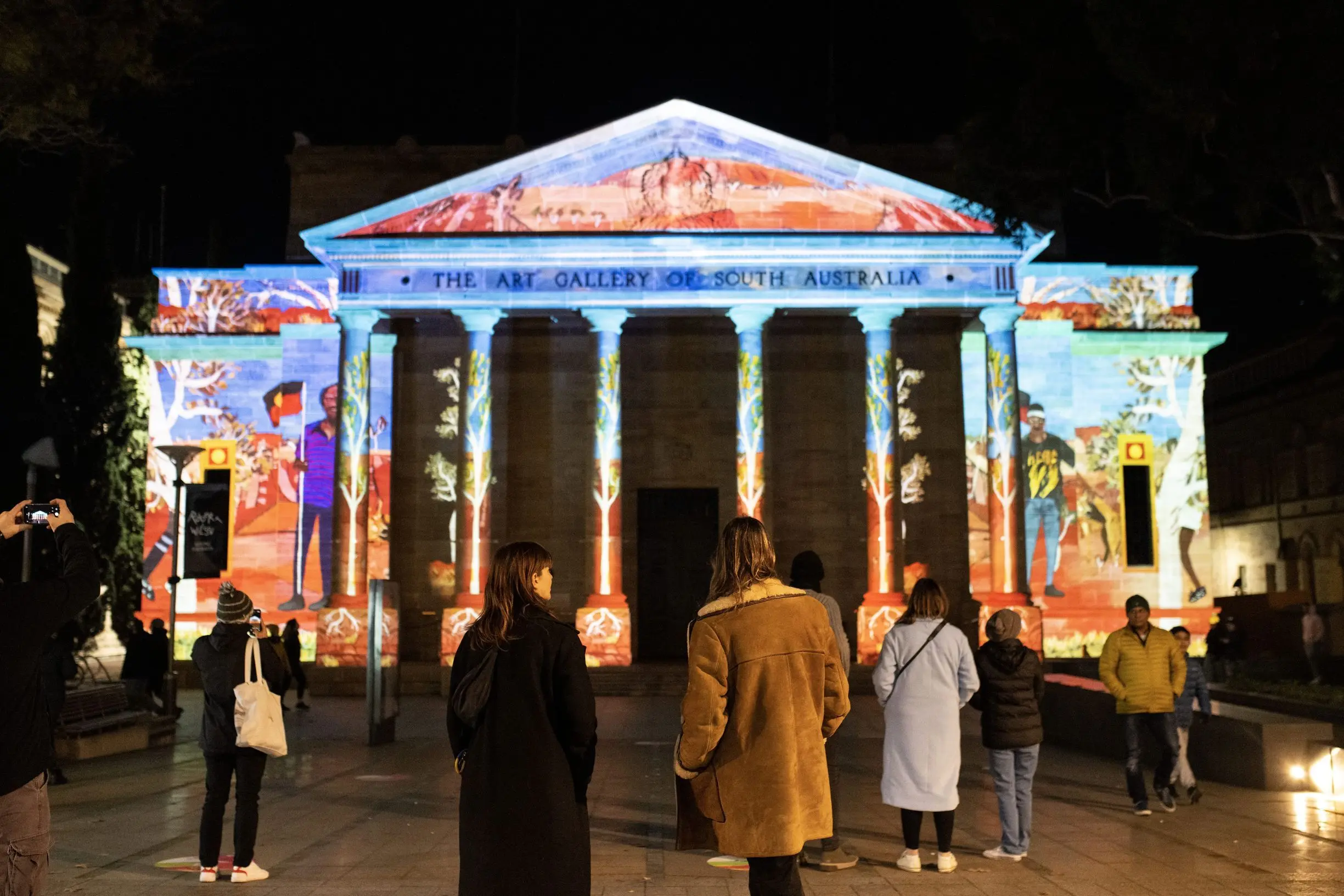
Both are free to enter, and both sit on North Terrace, about 50 metres apart.
The Art Gallery holds nearly 47,000 works spanning Asian, European, North American, and Australian First Nations art. It opens until 9 pm on the first Friday of each month.
The South Australian Museum covers five floors of natural history and cultural heritage, including one of the world’s most significant collections of Australian Aboriginal artefacts. The Egypt collection, with two mummies on display, is a standout for families.
I’ve taken the kids here a few times, and the Museum is genuinely beautiful inside — the building itself is worth the visit. The mummies go down well with children every time, and neither museum costs a cent.
On Kintore Avenue, a short walk from the Museum, the Migration Museum is also free to enter.
It’s one of the more moving museums in the city — covering the stories of the many communities that have settled in South Australia since colonisation.
Lot Fourteen
Lot Fourteen occupies the former Royal Adelaide Hospital site on North Terrace and is worth a walk through if you’re already on the strip.
It’s a tech and innovation precinct — home to the Australian Space Agency Mission Control Centre, the SmartSat CRC, and several defence and space tech companies.
The space exhibit area is free to wander, and the architecture of the precinct is interesting in its own right, with some of the old hospital buildings integrated into the new development.
It sits between the Art Gallery and the Botanic Garden, so it’s easy to fold into a North Terrace morning.
MOD. — Museum of Discovery
MOD. is a free, futuristic museum at the University of South Australia’s City West campus, about a 10-minute walk from the Central Market.
It runs interactive exhibitions every six months, combining art, science, and technology across seven gallery spaces.
The centrepiece is Australia’s first ‘Science on a Sphere’ — a six-foot, 3D video projection that can display entire planets.
It’s genuinely more interesting than it sounds and works well for a range of ages. Open Tuesday to Sunday, free entry. Check current exhibitions at mod.edu.au.
Himeji Garden
The Himeji Garden on South Terrace is one of those Adelaide spots that most visitors walk straight past.
It was gifted to Adelaide by its sister city, Himeji, Japan, and opened in 1982. The garden has a fish and turtle pond, a gravel garden, manicured shrubs, and plenty of shaded seating.
It’s a good 20-minute break from walking the CBD, and it’s completely free. Both the South Australian Museum and Art Gallery are within a 10-minute walk.
RoofClimb Adelaide Oval
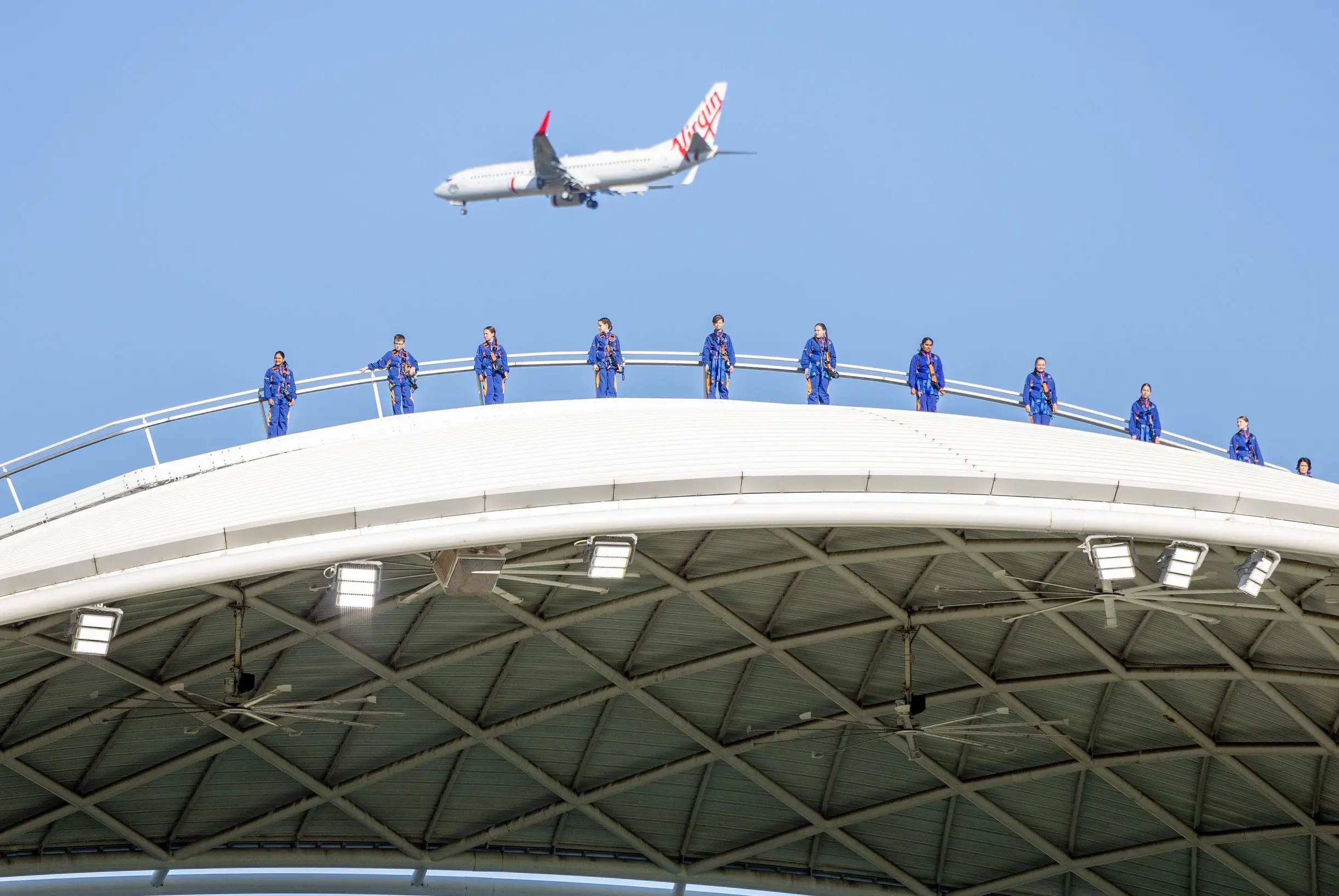
This is the standout paid experience in the city and one I’d recommend to first-time visitors without hesitation.
The Adelaide Oval RoofClimb takes you up the Western Stand to a platform 50 metres above the playing surface. You’re harnessed, guided, and the whole thing takes about two hours.
The views stretch from the Adelaide Hills to the Gulf St Vincent. Day climbs start from $119 per adult / $89 per child (8–15 years).
Twilight and night climbs are also available — the sunset climb is the pick if you can get the timing right. There’s also a ‘Game On!’ package that puts you on the roof during a live match.
Book in advance — popular sessions fill up. 👉 BOOK HERE
National Wine Centre of Australia
Sitting at the corner of Botanic Road and Hackney Road, just past the Botanic Garden, the National Wine Centre is a good introduction to South Australia’s wine regions before you head out to one of them.
Entry to the Wine Discovery Journey — an interactive self-guided experience through the winemaking process — is free. The tasting room has more than 120 wines available, and guided tours and dining experiences are also bookable if you want to go deeper.
Friday evenings from 5 pm to 7 pm, the Wined Bar runs live acoustic sets — a decent option if you’re in the area.
Adelaide Gaol
Adelaide Gaol operated from 1841 to 1988 and is now one of the city’s more distinctive attractions — part heritage site, part ghost tour venue.
The daytime self-guided tour is worth an hour if you’re interested in colonial history and the grimmer side of Adelaide’s past. The ghost tours run in the evenings from around 8:30 pm and last about two hours.
Entry costs around $37 per person and is capped at 20 people per tour, so book ahead.
Access note: Gaol Road has been subject to closures due to nearby hospital construction — check current access conditions at adelaidegaol.org.au before visiting.
Haigh’s Chocolates
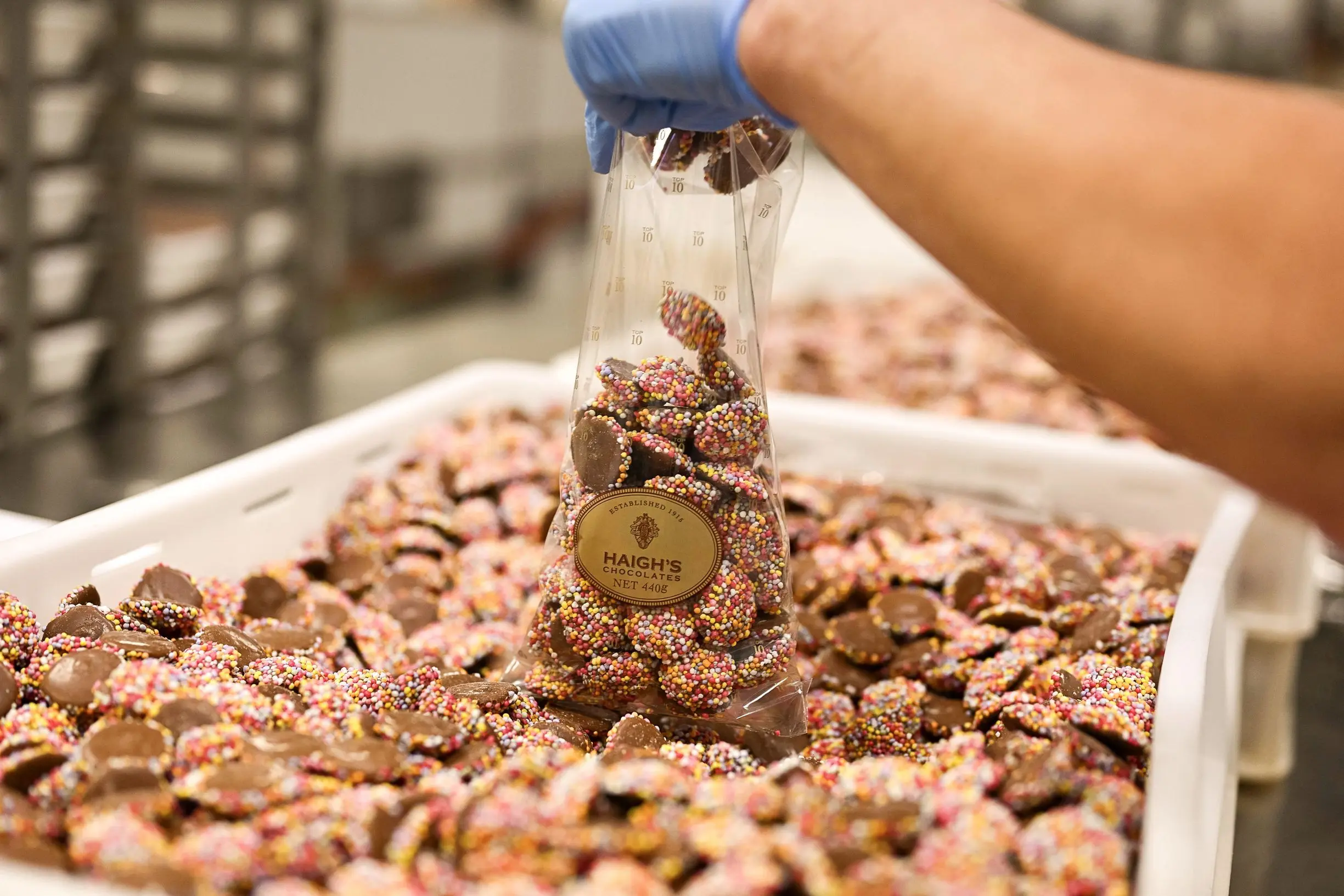
Haigh’s has been making chocolate in South Australia since 1915, and the factory tour at its Parkside Visitor Centre (154 Greenhill Road, Parkside) is a solid 20-minute stop.
The guided tour is free and covers the bean-to-bar process, the history of the company, and the original factory site. You get complimentary chocolate, tea, and coffee at the end.
Book through haighschocolates.com.au/tours — walk-ins aren’t guaranteed a spot. Tours run Monday to Saturday, not on Sundays or public holidays.
If you can’t make it to Parkside, the Rundle Mall store is the easiest option — it sits right on the corner, and I’ve walked past it more times than I can count on the way into the mall.
Rundle Mall and the JamFactory
Rundle Mall is Adelaide’s main shopping strip — 700-plus retailers across about 600 metres.
Most of the big names are here — Kmart, Target, Uniqlo, H&M — along with plenty of local retailers and food options. I find it easy to spend an hour here without really planning to.
The four famous bronze pigs (named Horatio, Oliver, Truffles, and Augusta), the Mall’s Balls, and a newer two-metre pigeon sculpture are worth looking out for.
The heritage-listed Adelaide Arcade, running between Rundle Mall and Grenfell Street, is one of the better-preserved Victorian shopping arcades in the country — there’s a small museum inside if you look for it.
A few minutes west on Morphett Street, the JamFactory is one of Australia’s leading contemporary craft and design centres. The gallery is free and the standard of work — ceramics, glass, jewellery, furniture — is serious.
You can also watch resident designers working in the open studios.
Getting Around the City for Free
Adelaide’s free City Connector buses run a loop through the CBD and inner suburbs, stopping at North Terrace, the Central Market, Rundle Mall, and Victoria Square.
Check current route numbers with Adelaide Metro before you go, as these are updated periodically.
I used to take this bus to work every day — train into the city, then the City Connector for the last stretch. In the mornings during rush hour, it fills up fast with a mix of workers and tourists.
The tram is also free between the Botanic Gardens stop and South Terrace, and continues south all the way to Glenelg (paid after South Terrace).
If you’re covering the Central Market, Botanic Garden, Art Gallery, Museum, National Wine Centre, and Himeji Garden in a single day, you can do most of it on foot or for nothing.
River Torrens + BBQ Buoys
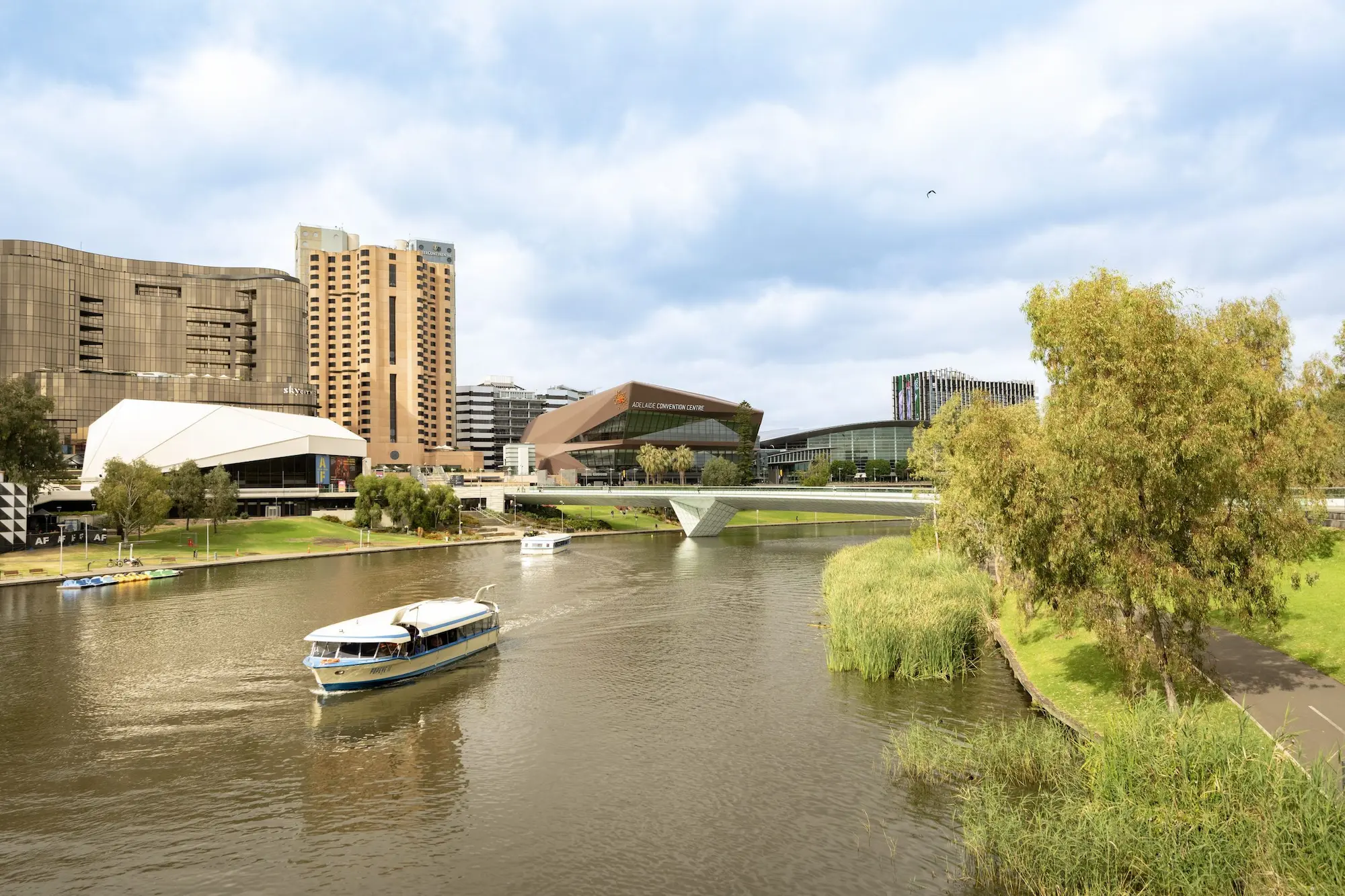
The Torrens Linear Park Trail runs through the heart of the city and is one of Adelaide’s better free experiences — good for a walk, jog, or hire bike along the river.
The Popeye river cruise departs from Elder Park and runs for 40–50 minutes along the Torrens, passing the Festival Centre, Adelaide University, and the North Adelaide parklands.
It drops you at the Adelaide Zoo entrance if you’re heading there next.
From around $32 per adult, rated 4.7 stars from 678 reviews on Viator. [book here]
The BBQ Buoys are another option — doughnut-shaped floating boats with a gas grill in the centre, moored in the Riverbank precinct. They seat two to ten people, and hourly hire starts at $130 per person.
BYO food and drinks, or order platters on arrival. No boat licence needed. 👉BOOK HERE
Adelaide Zoo
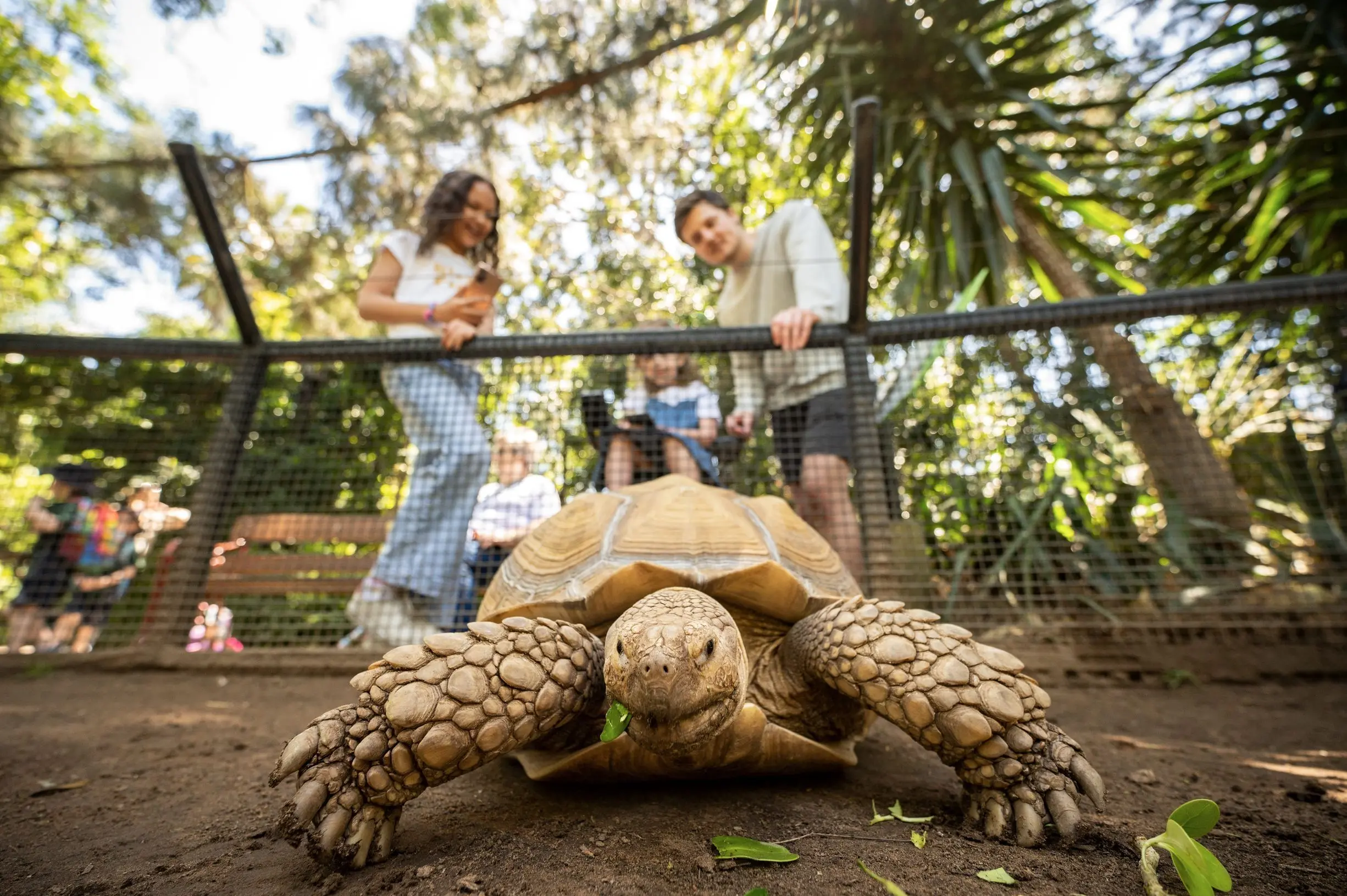
Adelaide Zoo is in the Botanic Park precinct, about a 10-minute walk from the Botanic Garden.
Adult entry is around $48, with concession prices available — check Zoos SA for current pricing as this updates annually.
The zoo has daily keeper talks, bird flight shows, and animal experiences like hand-feeding Sumatran tigers, bookable separately.
I’ve taken the kids here several times, and they love it. The zoo also runs occasional promotions — on Mother’s Day, mums get free entry, so it’s worth checking the Zoos SA website before you visit.
Adelaide Zoo has a sister reserve in Monarto, about 70km east of the city. I visited recently, and the scale of it is genuinely impressive — Monarto Safari Park is one of the largest open-range zoos outside Africa.
A hop-on hop-off bus loops through five stops, and you just get on and off at whatever you want to see. Allow at least half a day.
If the zoo price point is a concern, Gorge Wildlife Park in Cudlee Creek (about 30 minutes from the CBD) is worth knowing about.
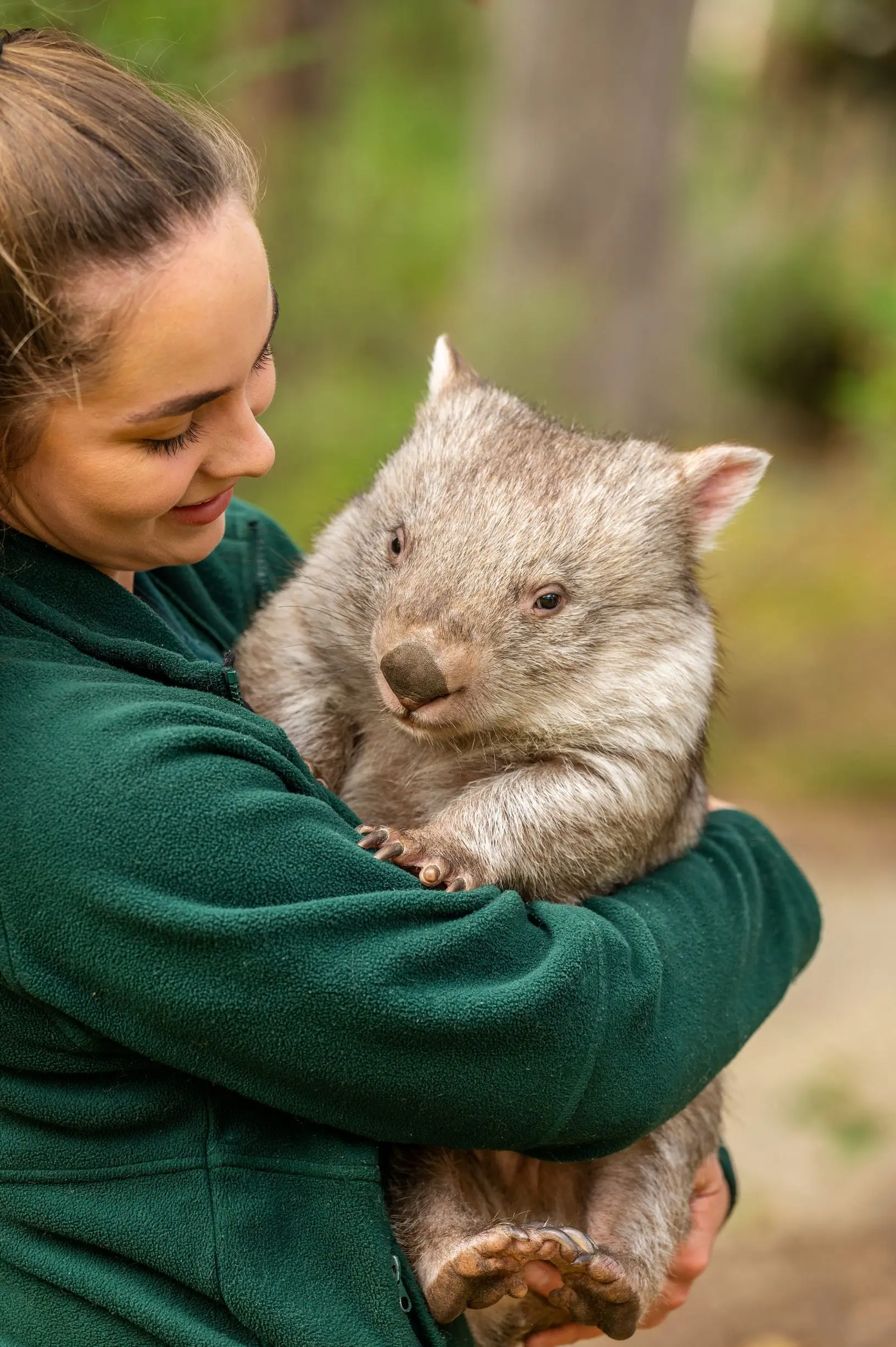
Entry is around $28 per adult, and it’s a much more intimate experience — you can hold a koala and hand-feed kangaroos and wombats at close range.
Glenelg
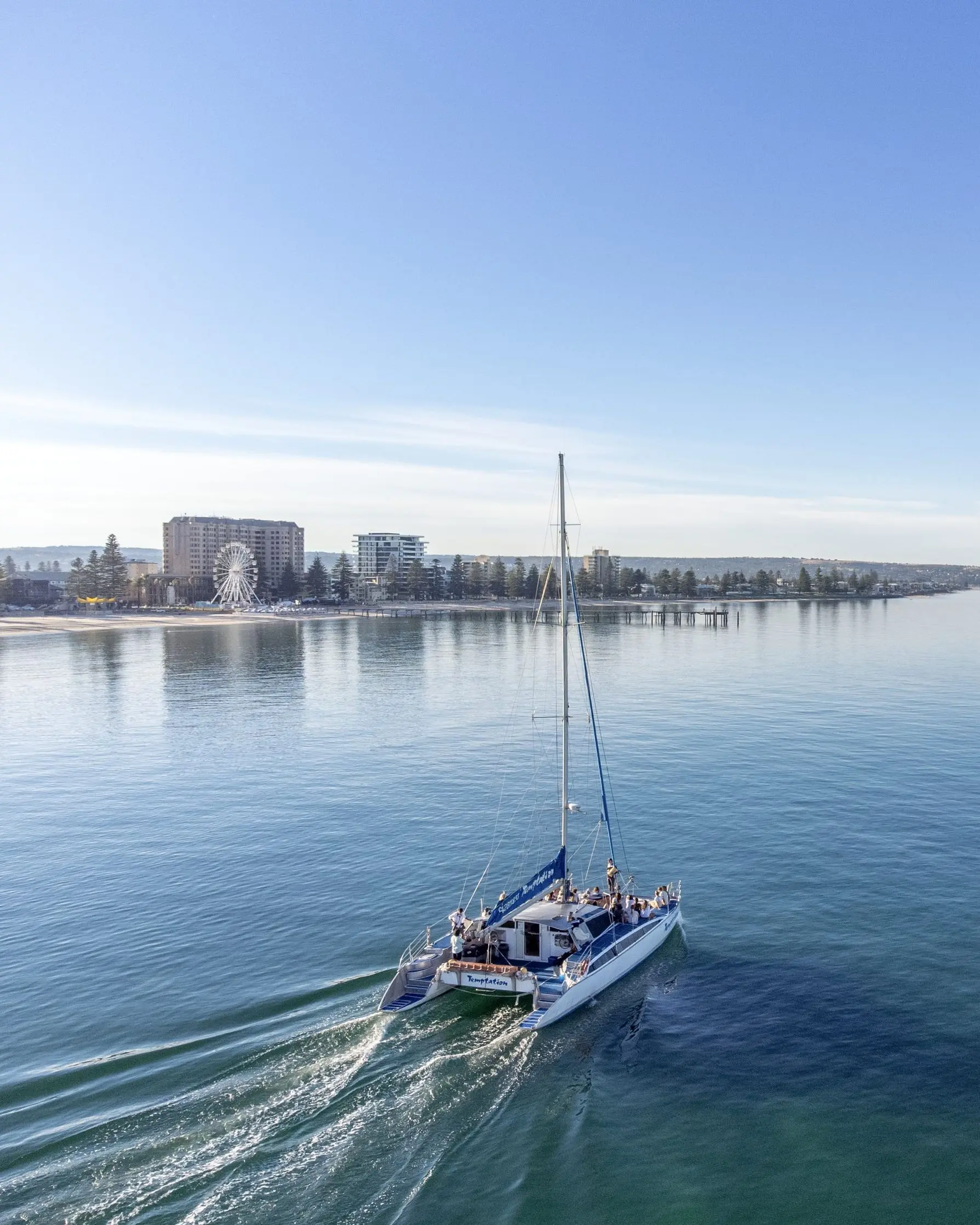
Glenelg is Adelaide’s main beach suburb and one of the easiest days out from the city — the tram runs directly from Victoria Square and takes about 30 minutes.
The tram is free to South Terrace, then a small paid fare for the remaining stretch to Glenelg.
I’ve been here more times than I can count. The food options around Marina Pier are solid, and the playground near the beach is one of the better ones around Adelaide.
The Beachouse amusement park is a firm favourite with my kids — I’ve ridden the Ferris wheel there too, and the views from the top are worth it.
The beach itself is good — clean white sand, sheltered water, solid swimming. From Glenelg you can walk north along the coastal path to West Beach (about 2km) and then Henley Beach (another 2km) — flat, easy, and worth timing for late afternoon.
For another beach with a different vibe, Semaphore is about 25 minutes northwest of the city by train (take the Outer Harbour line from Adelaide Station to Glanville, then walk down Semaphore Road).
It’s quieter than Glenelg, with a long jetty, good fish and chips, a heritage carousel, and seasonal amusement rides along the foreshore.
Temptation Sailing runs 3.5-hour dolphin swim cruises from Glenelg on a 17-metre catamaran. They hold the first licence in South Australia for wild dolphin swims, and the local dolphins are well-habituated to the vessel.
Swimmers typically get over an hour in the water. Non-swimmers can stay on the 360-degree viewing deck. 👉 BOOK HERE
Mount Lofty, Waterfall Gully and the Adelaide Hills
Mount Lofty sits 22 kilometres southeast of the CBD, and the hike from Waterfall Gully to the summit is one of the best short walks near Adelaide.
The trail starts at the Waterfall Gully car park — there are several waterfalls in the gully itself, worth a wander even if you’re not doing the full hike.
The summit walk is 3.9 kilometres one way, with around 350 metres of elevation gain.
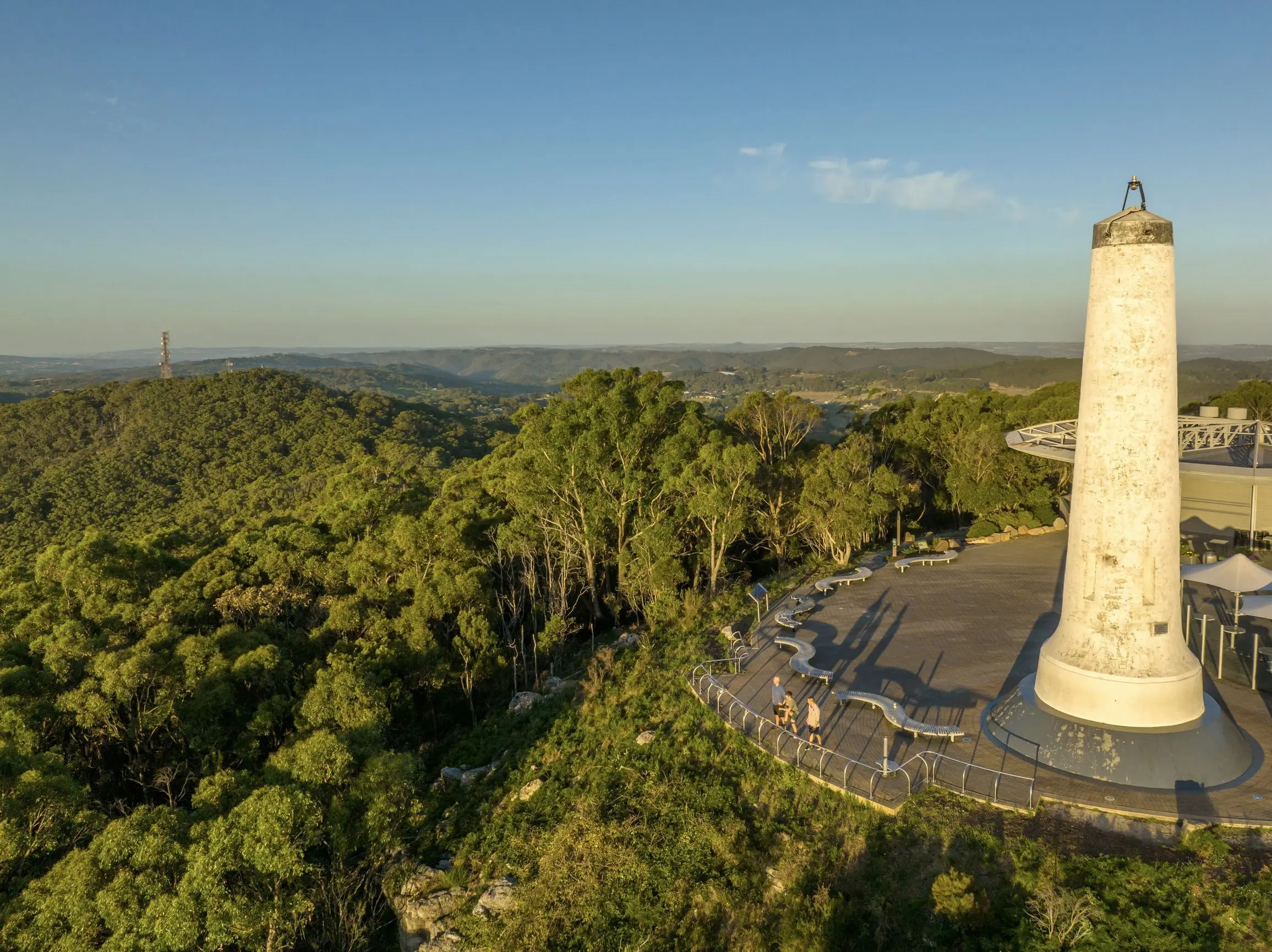
I’ve done this walk, and it’s no stroll — by the time you hit the final stretch, your legs know about it. The views at the top make the effort worth it, with the full Adelaide skyline and Gulf St Vincent stretching out in front of you.
Cleland Wildlife Park is in the Mount Lofty area, a short drive from the summit — one of the better places in South Australia to hold a koala and feed kangaroos up close. Entry is around $26 per adult. Check clelandwildlifepark.sa.gov.au for session times.
It’s a natural fit after the hike, or you can drive straight there without doing the walk (about 25 minutes from the CBD via the freeway).
Morialta Conservation Park is about 15 minutes northeast of the CBD and has three waterfalls of its own. The First Falls are an easy 20-minute return walk — the Third Falls take about 2.5 hours return and involve some decent climbing.
Windy Point is a lookout on Belair Road, about a 20-minute drive from the city, overlooking the Adelaide plains and Gulf St Vincent. It’s best at dusk, costs nothing, and makes a good detour on the way back from Hahndorf or Cleland.
Mount Lofty Botanic Gardens (97 hectares, about 18km from the city) is a separate site worth visiting in its own right — particularly in autumn when the cool-climate collection is at its best.
Adelaide Fringe Festival
The Adelaide Fringe runs from February to March and is the second-largest annual arts festival in the world — after Edinburgh.
Over 7,000 artists and 1,300-plus events run across venues citywide. The Garden of Unearthly Delights in the East Parklands is the main festival hub, with food, bars, and outdoor performances running late into the night.
A lot of events are ticketed, but there are plenty that are free. The Fringe is genuinely one of the better times to be in Adelaide — there’s something for every taste, and I find something new every year regardless of what I’m in the mood for.
If your visit overlaps with the Fringe, plan around it and book accommodation early — the city fills up. See adelaidefringe.com.au for the full programme.
The Adelaide Festival runs at the same time — a more curated programme of theatre, music, and literature. The WOMADelaide world music festival is held in the Botanic Park in early March, making late February to early March one of the best times to be in Adelaide.
See the WOMADelaide guide and Adelaide Fringe guide for more.
In winter, the Illuminate Adelaide festival (usually June–July) transforms the city with large-scale light installations and projections across the CBD and surrounding suburbs. Free to walk through, with some ticketed events alongside.
Port Adelaide
Port Adelaide is about 20 minutes northwest of the city by car, and it’s one of those places most first-time visitors skip but shouldn’t.
The historic maritime district has some of the best-preserved colonial architecture in South Australia — the streetscape along St Vincent Street and the wharf precinct is worth an hour on foot. Pick up a self-guided heritage walk map from the Visitor Information Centre on Nile Street.
The South Australian Maritime Museum, Aviation Museum, and National Railway Museum all sit within a short walk of each other and offer a combined entry discount.
The Railway Museum in particular is one of the best of its kind in Australia, with a significant collection of heritage steam locomotives and carriages.
Check current combined pricing at history.sa.gov.au.
The Port River is also home to a resident pod of bottlenose dolphins, and there are two ways to see them from the water.
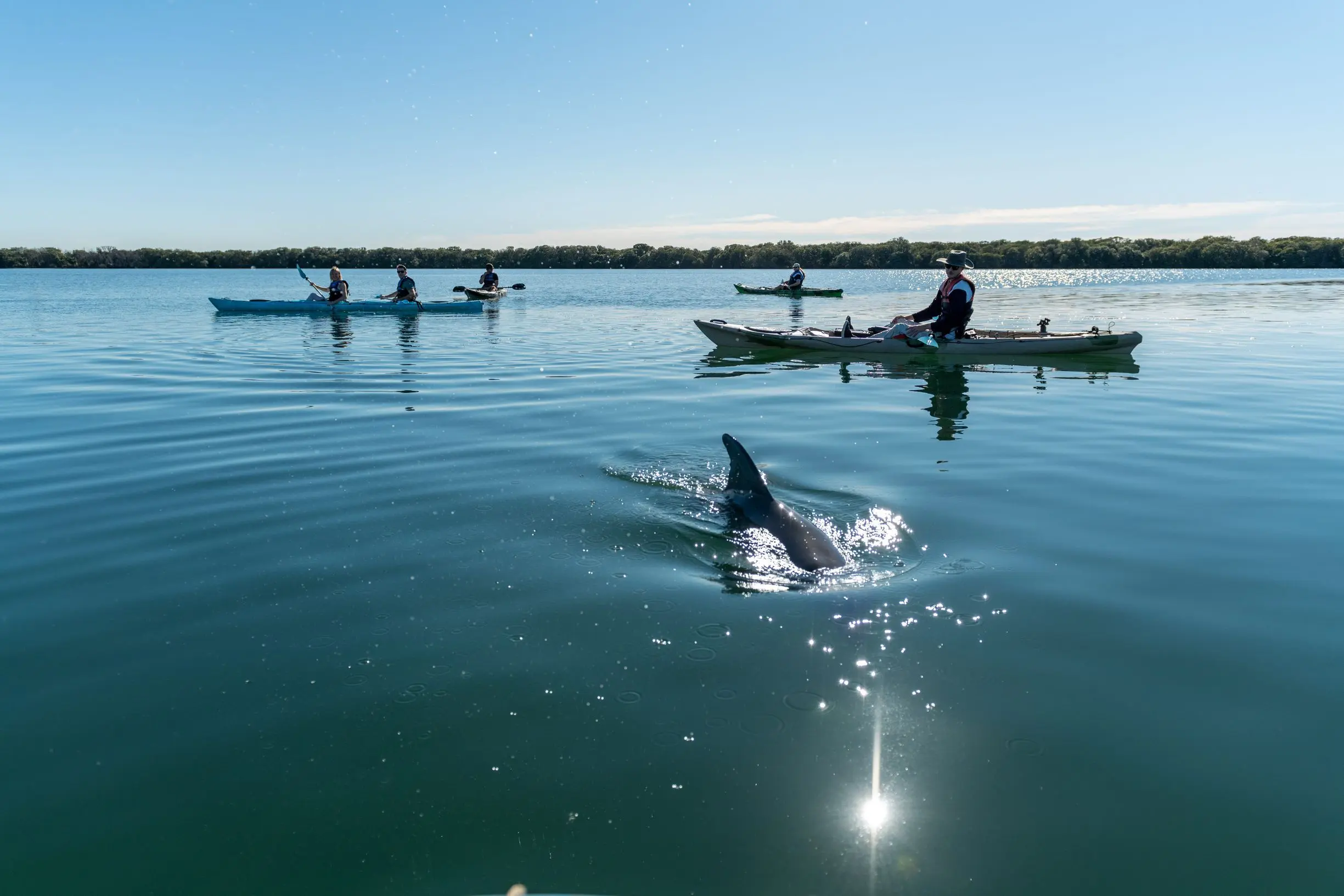
90-minute Dolphin & Ships Graveyard Cruise — covers the dolphins, the Adelaide Dolphin Sanctuary, and the rusting hulks of the Port River Ships’ Graveyard. Rated 4.6 stars from 364 reviews. From around $80+ per adult. 👉 BOOK HERE
Dolphin Sanctuary Kayak Tour — a three-hour guided paddle through mangrove waterways to the Dolphin Sanctuary. Rated 4.7 stars from 391 reviews. From around $78 per adult. No kayaking experience needed. 👉 BOOK HERE
Guided Things to Do in Adelaide
If it’s your first day in the city and you want to get oriented fast, the Ultimate Adelaide Walking Tour is the one I’d pick.
It covers Rundle Mall, Adelaide University, Parliament House, and the Central Market, with a local guide who actually knows the city. Rated 5.0 stars from 269 reviews on Viator.
Runs 2–3 hours. From around $80 per adult. 👉 BOOK HERE
The Adelaide City Highlights Tour (half-day, by coach) includes the Botanic Park, Adelaide Oval, St Peter’s Cathedral, and a stop at the National Wine Centre. From around $129 per adult. 👉 BOOK HERE
Day Trips from Adelaide
Adelaide’s location is one of its biggest assets — the Barossa Valley, Adelaide Hills, McLaren Vale, Fleurieu Peninsula, and Kangaroo Island are all within reach.
Barossa Valley — the most popular day trip from Adelaide. The Barossa Valley Hop-On Hop-Off Wine Tour lets you work through 10–15 wineries at your own pace over eight hours.
Rated 4.9 stars from 433 reviews. From around $100 per adult. 👉 BOOK HERE
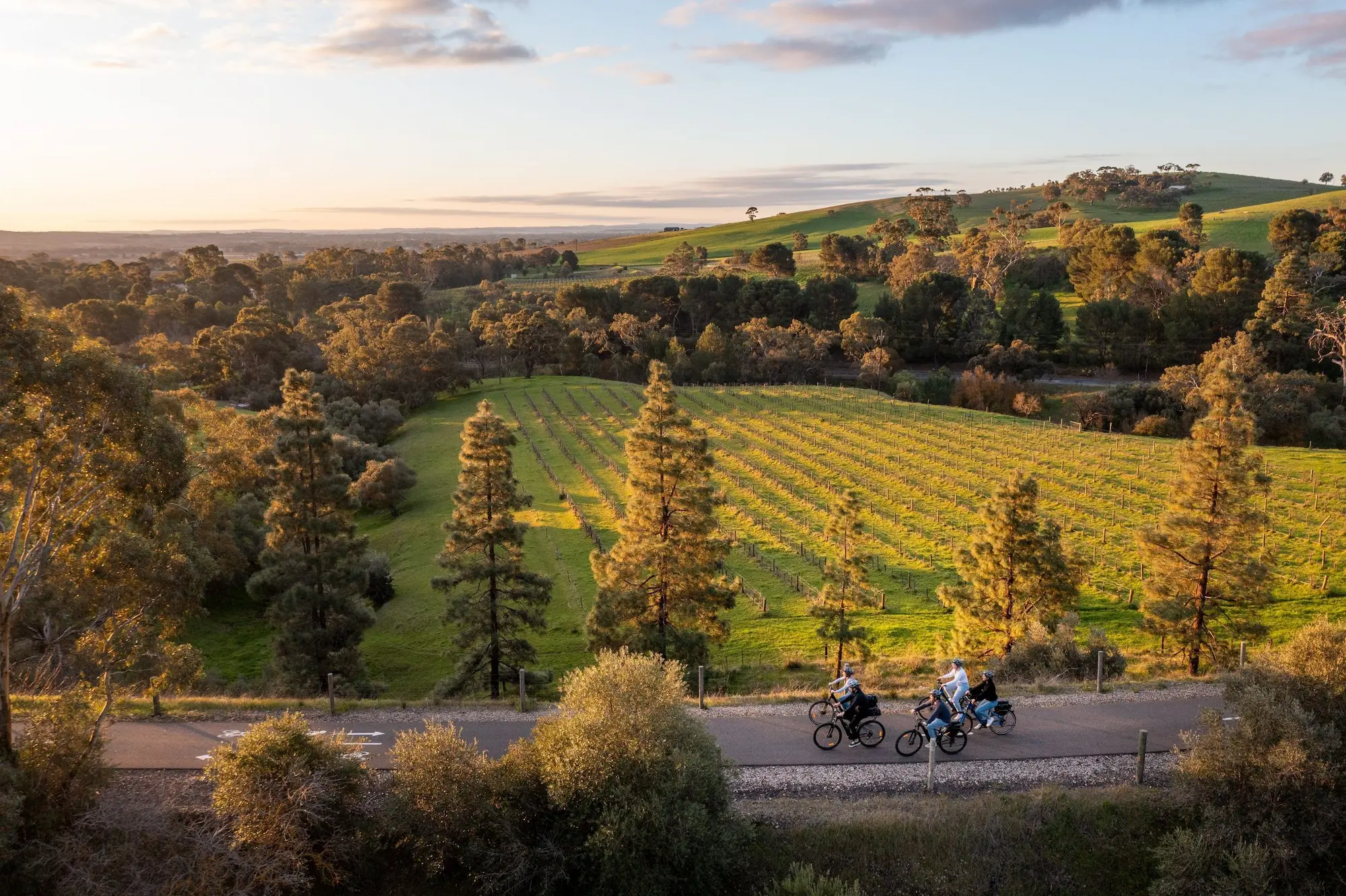
For a more intimate experience, the Barossa Valley Wine Tour with Local Guide, Barossa Pickup and Lunch is capped at just five guests and picks up from your Barossa accommodation — making it the pick if you’re spending a night in the valley rather than day-tripping from Adelaide.
Wineries include Chateau Tanunda, Gibson Wines, Atze’s Corner Wines, and Laughing Jack, with a stop at Maggie Beer’s Farm Shop and a charcuterie-style lunch included.
Rated 5.0 stars from 18 reviews and winner of Best Boutique Wine Tour Operator 2026 at the APAC Insider Awards.
From around $245 per adult. 👉 BOOK HERE
McLaren Vale — about 40 minutes south of Adelaide and a different character entirely from the Barossa. It’s a coastal wine region where the vines sit close to the Fleurieu coast, and you can pair a morning of tasting with an afternoon at a beach.
The region is best known for Shiraz, with some excellent Grenache and Cabernet also on offer. Self-driving gives the most flexibility, but guided tours are available from Adelaide from around $195 per adult. 👉 BOOK HERE
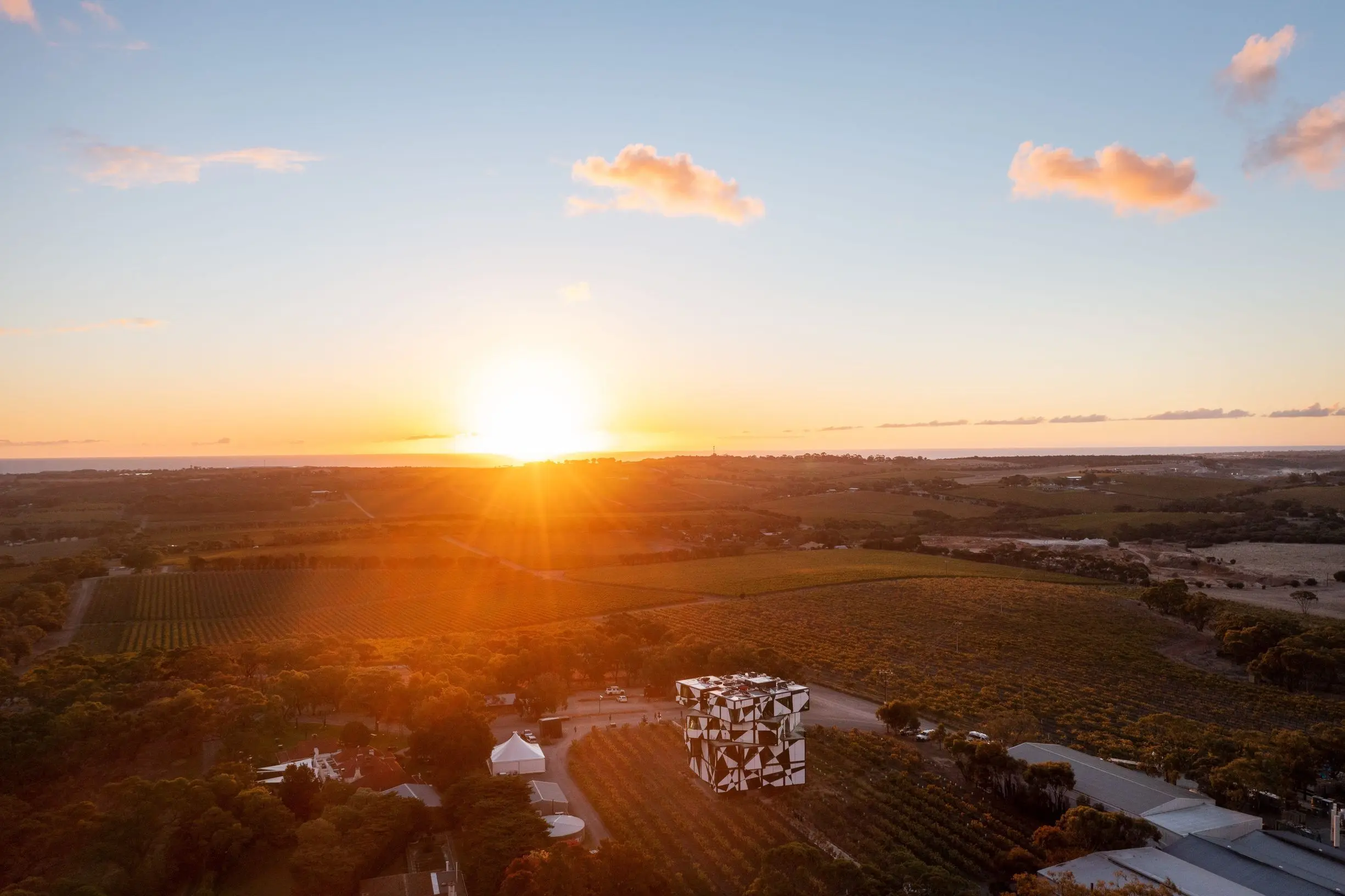
See [the McLaren Vale wine guide] for more.
Adelaide Hills and Hahndorf — Hahndorf is Australia’s oldest surviving German settlement, about 30 minutes southeast of the city. The main street has the obvious tourist shops alongside genuinely good food and wine.
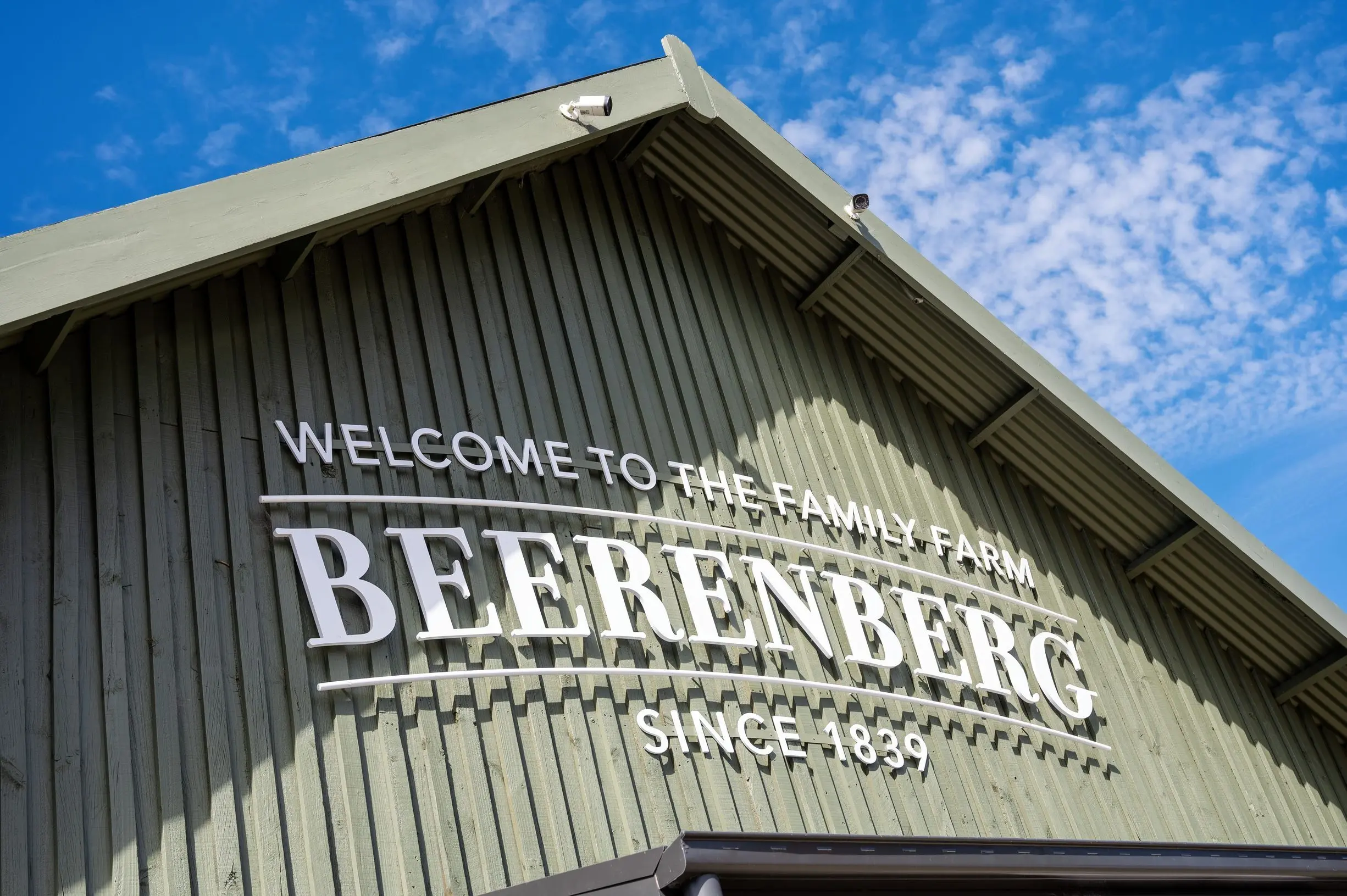
Beerenberg Farm on the edge of town is one of the better stops — strawberry picking in season (December to April roughly), plus a farm shop with their famous jams and sauces. Melba’s Chocolate Factory is also nearby and a solid stop if you’ve got kids.
The half-day Hahndorf tour includes views from Mount Lofty and free time to explore the township. From around $105 per adult. 👉 BOOK HERE
For a full-day option combining Hahndorf with Barossa tastings, lunch, and a visit to Melba’s Chocolate Factory, the Hahndorf & Barossa tour is rated 4.8 stars from 458 reviews. From around $245 per adult. 👉 BOOK HERE
Victor Harbor and the Fleurieu Peninsula — about 80 kilometres south of Adelaide- Victor Harbor is worth more than a quick stop.
The horse-drawn tram to Granite Island is one of those experiences that sounds gimmicky but is actually worth doing — the tramway has been running since 1894.
Granite Island has a colony of little penguins, with guided tours running at dusk — check current availability with the Granite Island Nature Park before visiting.
The Cockle Train runs between Victor Harbor and Goolwa on weekends and public holidays — a heritage steam train along the coast and a good way to see the Fleurieu.
If you’re visiting between June and September, whale watching from The Bluff at Victor Harbor is legitimate — southern right whales come into the bay to calve and are often visible from shore.
A full-day tour south of Adelaide takes in Strathalbyn, Goolwa, and Victor Harbor. Rated 4.7 stars from 194 reviews. From around $149 per adult. 👉 BOOK HERE
Kangaroo Island is reachable by ferry from Cape Jervis (about 90 minutes’ drive south of Adelaide) and is worth at least two nights if you have the time.
See the Kangaroo Island guide for how to plan it.
For more on day trips, see the day trips from Adelaide guide.
Practical Tips
Transport
- Adelaide’s free City Connector buses cover the CBD — check current route numbers with Adelaide Metro
- Free tram runs between the Botanic Gardens and South Terrace stops; continues to Glenelg for a small fare
- An Uber or taxi from the airport costs $25–$35 and takes about 15 minutes
- Pick up a Metrocard at the airport or 7-Eleven for public transport outside free zones — single-trip fares without one are more expensive
Parking
- Street parking in the CBD is metered and limited to 1–2 hours during business hours — not suitable for a full day
- Wilson and Secure Parking both have multi-storey car parks near the Central Market and Rundle Mall — expect to pay $20–$35 for a full day
- For the Adelaide Oval and North Adelaide, there’s street parking on King William Road and in the surrounding parklands — free on weekends and after 6 pm on weekdays in most spots
- For Glenelg, street parking on Moseley Square and surrounding streets is free on weekdays; metered or time-limited on weekends
Best time to visit
Adelaide’s climate is Mediterranean — hot summers and mild winters. Spring (September to November) and autumn (March to May) are the most comfortable times to be here.
Summer pushes past 40°C regularly. Late February to early March is exceptional if festivals are a priority — the Fringe, Adelaide Festival, and WOMADelaide all run simultaneously.
Winter (June–July) has Illuminate Adelaide and whale watching at Victor Harbor going for it.
Common Mistakes to Avoid
- Skipping Glenelg — it’s 30 minutes on the tram, and it’s the easiest beach day the city offers
- Trying to do Barossa and Adelaide Hills in the same day — both are good half-day trips individually, and combining them means rushing both
- Booking the RoofClimb day-of — popular sessions fill up a week or more in advance, especially at twilight
- Missing the Mortlock Chamber — it’s free, it’s on North Terrace, and it’s one of the most impressive rooms in any building in Australia
- Overlooking McLaren Vale — most visitors default to the Barossa, but McLaren Vale is closer, coastal, and more relaxed — worth knowing about
- Underestimating the North Terrace precinct — the Botanic Garden, Art Gallery, Museum, Lot Fourteen, National Wine Centre, and Adelaide Zoo can all be reached on foot from each other. One of the better free half-days in any Australian city
FAQ
What is Adelaide most known for?
Adelaide is best known for its food and wine culture — it sits at the centre of several major wine regions including the Barossa Valley, McLaren Vale, Clare Valley, and Adelaide Hills. The city is also known for its festivals (Fringe, WOMADelaide, the Adelaide Festival), its free cultural institutions on North Terrace, and the Adelaide Oval.
Is Adelaide worth visiting for a few days?
Three days is enough to cover the city’s main attractions and get out to at least one wine region or the Adelaide Hills — five days gives more breathing room for Glenelg, Kangaroo Island, or a night in the Barossa. See the [3-day Adelaide itinerary] for a planned version.
What are the best free things to do in Adelaide?
The Art Gallery of South Australia, the South Australian Museum, the Migration Museum, the Centre of Democracy, the Adelaide Botanic Garden, the Mortlock Chamber (State Library), MOD., the Himeji Garden, and the JamFactory on Morphett Street are all free. The City Connector bus and inner-city tram are also free to use.
How far is Glenelg from Adelaide city centre?
Glenelg is about 11 kilometres southwest of the CBD. The tram from Victoria Square takes around 30 minutes — it’s free to South Terrace, then a small fare for the final stretch.
How far is the Barossa Valley from Adelaide?
The Barossa Valley is about 70 kilometres northeast of Adelaide. By car, it takes around an hour, and most guided tours include pick-up and run for a full day.
Is Adelaide safe for solo travellers?
Adelaide consistently ranks as one of Australia’s safest cities. The CBD and inner suburbs are safe to walk at night, though the usual common-sense precautions apply around late-night entertainment areas on weekends.
What’s the best month to visit Adelaide?
March to May (autumn) is a good time — temperatures drop to a comfortable 18–25°C, and the wine harvest is underway across the Barossa and McLaren Vale. Spring (September to November) is also popular and less crowded than summer.
When is the Adelaide Fringe Festival?
The Adelaide Fringe runs annually from mid-February to mid-March — it’s the world’s second-largest arts festival after Edinburgh, with over 1,300 events across ticketed and free performances city-wide. See adelaidefringe.com.au for dates and the full programme.
Where can I hold a koala near Adelaide?
The main options are Cleland Wildlife Park near Mount Lofty (around $26 adult entry, 25 minutes from the CBD) and Gorge Wildlife Park in Cudlee Creek (around $28 adult, 30 minutes away). Cleland is easy to combine with the Mount Lofty hike — Gorge Wildlife Park is smaller, more intimate, and consistently well-reviewed for value.
Is McLaren Vale worth visiting from Adelaide?
Yes — it’s one of the more underrated day trips from Adelaide. About 40 minutes south of the city, the cellar doors are more relaxed than the Barossa, and you can combine wine tasting with an afternoon at one of the nearby Fleurieu beaches.
