
The Coorong sits about two hours south-east of Adelaide, and it’s one of those places that feels completely untouched.
This long, narrow stretch of water runs behind the dunes for over a hundred kilometres, and its name comes from the Ngarrindjeri word Kurangk, meaning “long neck” – a nod to its winding shape.
The whole area is part of an internationally recognised wetland, and it’s packed with wildlife, saltwater lagoons, sand dunes, freshwater lakes, and quiet, empty beaches that go on forever.
What I love most about the Coorong is how it brings everything together – nature, culture, adventure and calm.
One moment you’re watching pelicans glide over the still water; the next, you’re walking along bright white sand with barely a footprint in sight.
You can cruise through the lagoons, taste Coorong mullet straight from the source, hear stories from the Ngarrindjeri people, or sit by the shore and let the landscape do its thing.
Whether you’re into birdwatching, fishing, photography or slow travel, the Coorong has a way of pulling you in. Let’s go find out what’s waiting.
Nature Walks and Scenic Trails

One of the best ways to slow down and take in the Coorong is to go for a walk.
The trails here don’t just track through the bush – they take you through lakeside boardwalks, over sandy dunes, and into spots where it’s just you, the breeze, and the sounds of nature.
It’s peaceful, grounding, and surprisingly varied for such a quiet part of the world.
- Meningie Lions Walking Trail: Kicking off right in the town of Meningie, this trail gives you a taste of how diverse the area is.
It winds through native bushland and wetlands, leading up to Meningie Hill lookout.
It’s about 3.5 km one-way and suits most fitness levels. I’d allow 1 to 3 hours, depending on your pace – there’s plenty to stop and admire along the way, especially the spring wildflowers.
The lookout at the top is worth it – a 360° view over Lake Albert and the wetlands that’s especially beautiful at sunset.
- Pelican Path (Yunti Ngopun Ngami): Just down by the lakefront, this easy 400-metre boardwalk is flat, family-friendly, and perfect for a quick stroll.
Named after a Ngarrindjeri phrase meaning “Together We Walk,” it’s dotted with signs and artwork sharing stories of the land, culture, and local birdlife.
There’s always a good chance of spotting pelicans gliding across the water. It’s short but meaningful and a lovely way to connect with the place.
- Nruggie Ngoppun Trail (Salt Creek): This easy 2.5 km loop is named after a Ngarrindjeri phrase that means “good walk” – and it really is.
The track meanders through low coastal scrub, lagoons and a new causeway where freshwater flows into the system again.
It’s flat and relaxed, taking around an hour to complete. The birds are often out in force, and the interpretive signs along the way share some insight into the local ecology and the deep connection the Ngarrindjeri people have to this land.
- Other Notable Walks: The park is also home to numerous shorter tracks that are equally rewarding.
The Jack Point Pelican Observatory Walk is a gentle 1.2 km return path that cuts through the dunes to a little viewing shelter overlooking pelican breeding islands – a great spot if you’re into birdwatching.
Then there’s the Chinaman’s Well Historic Walk, a short 900 m loop just off the highway near Salt Creek.
It leads to an old stone well and what’s left of a stopover camp from the 1850s when Chinese miners were making the long walk to Victoria’s goldfields.
Over at Parnka Point, even a five-minute wander gives you sweeping views of both the North and South Lagoons – the kind of place where the sky and water seem to blur, especially when the birds are moving across the wetlands.
Each trail offers a different side of the Coorong, but all of them leave you feeling like you’ve stepped into something ancient and still.
Birdwatching and Wildlife

Birdlife is everywhere in the Coorong. This place is one of the best birdwatching spots in the country, and it’s not just a local thing – it’s recognised globally as a RAMSAR-listed wetland, which means it’s a big deal for migratory birds.
Over 240 species have been recorded here, and during spring and summer, birds travel thousands of kilometres from places like Siberia and Japan to feed and rest in the Coorong’s lagoons and mudflats.
The sheer number of birds and the peacefulness of it all make the Coorong feel like a natural sanctuary.
- Pelican Breeding Colony at Jack Point: This spot, tucked along the southern lagoon, is home to Australia’s largest pelican breeding colony.
Out on the low islands, you’ll see hundreds of them nesting together – gliding in, honking across the water, preening on the sandbanks, and feeding their chicks.
It’s one of those sights that makes you stop and watch. The walk-in is short and peaceful, winding through the dunes to a small viewing shelter.
There are signs along the way explaining what the pelicans are doing and why this place matters so much.
Early mornings and late afternoons tend to be best, especially when the light’s soft and the birds are most active.
If you’ve read or watched Storm Boy, this is part of the Coorong that brings it to life – it’s easy to imagine your own “Mr Percival” gliding past right in front of you.
- General Birdwatching: There’s more to the Coorong than pelicans. The whole stretch is a haven for birdlife, with shallow lagoons, freshwater lakes, and salty flats drawing in birds from all over.
You’ll spot red-necked stints darting along the mud, sandpipers and curlews probing the edges, and elegant avocets sweeping their bills through the water.
The freshwater spots like Lake Albert and Lake Alexandrina pull in black swans, herons and ibis, while the quieter samphire flats often hide shy species like crakes and rails.
Birdlife Australia lists the Coorong as a Key Biodiversity Area, and for good reason – it’s full of life if you slow down and look.
There’s even a self-drive Coorong Birdwatcher’s Trail map to help find the best viewing spots.
Long Point, near Meningie, features a bird hide that typically offers excellent views of waders and waterfowl.
Hindmarsh Island offers easy access to Murray Mouth lookouts, where terns and seabirds gather along the coast.
If you’re around in late summer when water levels drop, keep an eye out for massive gatherings of banded stilts on the exposed lakebeds – it’s a surreal sight, especially if you’ve got a camera in hand.
It’s not just birds, either. Kangaroos and emus often show up along the quieter trails, especially in the early morning or late afternoon.
Now and then, an echidna might shuffle across the track, nose down and not fussed by anything.
Water-Based Activities and Adventures
The mix of calm lagoons, winding waterways, and the wild edge of the Southern Ocean makes the Coorong a brilliant spot for water adventures.

- Coorong Cruises: Jumping on a cruise from Goolwa is one of the best ways to explore the Coorong, and the Coorong Highlights Cruise is the perfect way to experience it all.
This laid-back, yet informative tour takes you through the Goolwa Barrage lock, where the Murray River meets the sea.
As you cruise past, you might spot New Zealand fur seals sunning themselves near the gates, adding a touch of wildlife magic to your journey.
Once you’re through, the landscape changes, revealing stunning lagoons surrounded by towering white dunes.
Birdlife is abundant, and it’s not uncommon to see pelicans and cormorants soaring overhead. The scenery is truly something to behold, offering a peaceful escape from the everyday.
Onboard, the live commentary brings the area to life. Discover the Ngarrindjeri culture and the early European settlement, connecting the history of this remarkable region.
The cruise also includes a guided walk to search for bush tucker, and if you’re up for it, you can even try your hand at digging for cockles in the sand.
This is a 5-hour tour that includes morning or afternoon tea, making it a comfortable and enjoyable way to explore the Coorong without feeling rushed.
- Coorong Lunch Cruise and Tour: Start your day with a convenient 8:00-8:30 am pick-up from your hotel, then settle in for a coffee and a chat about the adventures ahead.
With your camera ready, you’ll be set to capture the birdlife and marine creatures in their natural habitat as you head off on this full-day adventure.
The first stop is Victor Harbor, where you’ll take in the coastal views before heading to The Bluff and the nearby Granite Island.
The tour continues through Port Elliot, offering numerous opportunities to capture stunning photos along the way.
After a scenic drive, you’ll reach Goolwa Wharf for the start of the 3.5-hour Coorong cruise, complete with lunch and afternoon tea.
As the boat cruises along the Coorong, keep an eye out for wetland birdlife and the meeting point of the Murray Mouth.
The cruise includes a guided walk through the sand dunes to the pristine beaches beyond, offering a perfect opportunity to stretch your legs and appreciate the untouched beauty of the area.
After all the exploring, you’ll enjoy a delicious lunch and a soothing afternoon tea on board, making sure you’re fuelled for the journey ahead.
The tour wraps up back at Goolwa Wharf around 4:30 pm, and you’ll be dropped off at your hotel by 6:00 pm.
The tour includes private transportation, Wi-Fi on board, and all the essentials to make your day seamless and comfortable.
- Kayaking in Coorong National Park: Exploring the Coorong National Park by kayak is an unforgettable way to experience this 86-mile-long (140 km) stretch of protected saltwater lagoons and sand dunes.
The Full-Day Kayaking Tour allows you to paddle through this stunning landscape while minimising impact on the park’s delicate ecology.
Unlike many other kayaking tours, this one offers more time on the water and includes morning tea and lunch, so you can truly focus on enjoying the experience.
The tour departs from Mundoo Channel Drive at 9:00 a.m. and wraps up around 3:00 p.m.
During the three-hour kayaking session, you’ll make several stops to stretch your legs and enjoy some local food.
The highlight is a walk across the sand dunes at Younghusband Peninsula, where you’ll have the chance to explore on foot and take in the impressive view of the Southern Ocean.
Along the way, the guide will lead you on a bush tucker walk, sharing insights about the area’s unique flora and fauna.
You’ll get a deeper understanding of the Coorong’s natural wonders through the guide’s commentary, which ties together the cultural significance and environmental importance of the region.
By the end of the day, you’ll have had an immersive experience—both on the water and on foot—without rushing through any of it.
- Fishing and Boating: The surf side of the Coorong – especially along Ninety Mile Beach – is a favourite for serious anglers.
Access tracks like Tea Tree Crossing (in summer) and 42 Mile Crossing take you over the dunes to some of South Australia’s best surf fishing beaches.
Depending on the time of year, you might hook salmon, mulloway, or bream in the gutters.
The real local gem, though, is Coorong mullet – a small native fish with a sweet, buttery flavour. It’s the hero of many coastal meals, often smoked or pan-fried, and packed with Omega-3.
If you’re driving onto the beach, make sure you’ve got a proper 4WD and always stick to the fishing bag limits and seasonal rules.
The water’s protected, but it’s still a fragile place. For boating, the lagoons are ideal – flat and open, perfect for cruising or even water skiing on Lake Albert.
Launch points like Meningie and Policeman’s Point are easy to access, though you’ll want a shallow-draft boat or dinghy in some of the narrower channels.
One of the most unique ways to explore this part of the Coorong is to do so with a local. Coorong Wildside Tours, run by a third-generation fisherman, offers boat tours that blend wildlife watching and fishing history.
You can join a “Seabirds and Seals” cruise, check out a working fishing shed, and even try some of the catch straight from the source.
It’s a proper behind-the-scenes look at life on the water here – and you’ll probably go home with a feed of fresh fillets too.
Cultural and Historical Highlights

The Coorong isn’t just about landscapes – it’s full of stories, too. The Ngarrindjeri people are the traditional owners of this land, and their deep connection to the land and water shapes everything about the region.
Their culture runs through the place like the lagoons themselves – steady, strong, and still present today.
Later on, European settlers arrived – including pastoralists, fishermen, and even a few bushrangers – and they left their mark as well.
As you move through the Coorong, you’ll find traces of both histories side by side.
There are Aboriginal sites that hold deep meaning, old fishing camps tucked into the scrub, and landmarks that hint at how life once looked out here.
- Raukkan: Perched on the edge of Lake Alexandrina, this small Aboriginal community is home to the iconic red-brick church you’ll recognise from Australia’s $50 note, right alongside Ngarrindjeri author, preacher, and inventor David Unaipon, who was born here.
The church, built in 1869, sits proudly on the rise overlooking the lake and plains below. Standing there, looking out from the same spot that appears on the note, feels both humbling and powerful.
This place isn’t just a photo stop – it’s a living testament to the Ngarrindjeri people’s strength, culture, and contributions.
There’s a small museum and interpretive signs around Raukkan that help paint the picture of its past as a mission settlement and its role today in sharing knowledge and identity.
Consider booking a cultural tour or speaking with a representative ahead of time. Hearing directly from Ngarrindjeri elders adds a whole new layer to your understanding of the Coorong, also known as Kurrangk – the “Land of the Long Neck”.
Just down the road near Meningie, Camp Coorong offers additional opportunities to learn, featuring a cultural museum and occasionally hosting hands-on programs or storytelling sessions.
It’s a calm, grounded space where the connection between people and land comes through clearly.
These places aren’t flashy or crowded – they’re quiet, thoughtful, and deeply rooted in a history that stretches back thousands of years. - Point Malcolm Lighthouse: Tucked away near Narrung, where Lake Albert meets Lake Alexandrina, Point Malcolm Lighthouse is a bit of a surprise – it’s Australia’s only inland lighthouse.
Built back in 1878, it once guided paddle steamers through the narrow passage between the lakes. It’s not big or flashy, but it’s full of character and holds a unique place in the Coorong’s story.
The cast-iron tower still stands, though it’s no longer in use. You can walk right up to it and check out the plaques that share its history – how it was built and what life was like for the keepers who looked after it.
Next to it sits the old keeper’s cottage, adding a bit of charm to the scene. Getting there is half the fun.
The drive from Meningie takes approximately 30 minutes and includes a crossing of the water on the Narrung ferry, which operates 24 hours a day and is free.
It’s a peaceful little spot, with reed-fringed water and not much else around – a nice place to stop, stretch your legs, and snap a photo.
And yes, seeing a lighthouse this far from the ocean is one of those quirky Coorong moments worth checking out. - Chinaman’s Well Historic Site: Just off the Princes Highway, about 30 km south of Salt Creek, Chinaman’s Well is one of those places that catches you off guard – a quiet patch of scrubland with a big story behind it.
A short walking loop takes you past the remains of a hand-carved sandstone well, rock quarries, and what’s left of an old inn or staging post. It feels like stepping back into a different time.
The well dates back to the 1850s, when it was constructed during the gold rush by Chinese migrants travelling overland from South Australia to Victoria.
Back then, landing in Adelaide and walking across the Coorong meant avoiding a steep entry tax charged to Chinese arrivals in Victoria.
It was a long, rough journey, and the Coorong became a key route. Chinaman’s Well was one of the few places travellers could stop to rest, refill on water, and keep going.
Today, interpretive signs along the track tell the story of those journeys – the challenges, the determination, and the slight traces left behind.
You’ll see the clever stonework of the well and cistern, bits of an old eating house, and even some weathered telegraph poles still standing along the route.
It only takes about 30 minutes to explore, but standing there, it’s easy to picture the gold seekers resting under the same sun right in that very spot. - Meningie’s Cheese Factory Museum: In Meningie, just next to the Lakeside Caravan Park, there’s a gem of a spot that often flies under the radar – the Meningie Cheese Factory Museum.
Housed in the town’s old cheese factory, it’s a cosy little place packed with stories from the region’s past.
Inside, you’ll find displays on early farming life, vintage tools and machinery, and the old ways of fishing the lakes and Coorong for salmon and mullet.
I always find places like this give you a real feel for how people lived out here – how they made cheese from local dairy farms, how they hauled in the catch, and how they got by in such a remote part of South Australia.
There’s a reconstructed period room, old blacksmith gear, fishing nets, and plenty of hands-on history. The volunteers here are usually locals, and they’ve always got a good story or two if you’re up for a chat.
Outside, the grassy area is perfect for a picnic, and Freshies Café next door serves great coffee and occasionally features live music on weekends.
It’s a relaxed stop that provides a proper sense of the town’s heritage – great for families or anyone curious about the people who have shaped life around the Coorong.
Food and Local Produce Experiences

Spending time out in the Coorong works up an appetite – and luckily, the food here makes the most of the landscape around it.
With lakes, rivers, and the Southern Ocean all close by, seafood takes centre stage.
Add in a bit of country charm, and you’ve got some pretty memorable meals ahead. Here are a few local food experiences worth chasing down:
- Taste Coorong Mullet and Fresh Seafood: You can’t visit the Coorong without tasting its signature catch – the Coorong yellow-eye mullet.
This fish has been part of local life for generations, valued by the Ngarrindjeri people and early settlers for its buttery, mild flavour.
These days, it’s a bit of a regional star, served in pubs, cafés, and delis all around the area.
The Meningie Hotel does a great crumbed and pan-fried version, while some roadhouse delis still serve it pickled in the old German style – sharp, sweet and full of flavour.
If you want to take some home or try it fresh off the boat, head to Coorong Wild Seafood in Meningie. It’s a family-run spot where you can buy fresh or smoked mullet, chat with the fishers, and even join a tour to see how it all works.
They’re all about sustainable fishing and love sharing the story behind the catch. There’s more to try, too.
Goolwa pipis – those little surf clams from the beach – often turn up in pasta or seafood chowder.
In cooler months, you might find salted Coorong garfish or even some Murray River yabbies if they’re in season. - Country Dining in Coorong Towns: The Coorong might feel remote, but you won’t go hungry out here.
The towns have a few solid spots that serve up good, honest country food – the kind that hits just right after a day of walking, paddling, or exploring.
In Meningie, the historic Meningie Hotel (since 1867) is the go-to for classic pub meals – think schnitties, steak, and the occasional local fish special.
Just down the road, Meningie Bakery has built a bit of a reputation. Their Coorong Mullet pie is a local gem if it’s on for the day, and their vanilla slices and pasties tend to disappear early – proper road trip staples if you’re passing through.
For something more relaxed by the lake, Freshies Café & Bar is hard to beat. They’ve got everything from seafood baskets and burgers to cakes and coffees, all with views over Lake Albert.
It’s a popular spot for caravan park visitors, especially on weekends when there’s sometimes live music or themed food nights. The vibe is friendly, laid-back, and a bit of a hub in town.
A lot of places use local ingredients, too – it’s always worth asking if the fish of the day is Coorong-caught or if the beef is local Coorong Angus. Even a simple picnic feels special here.
Grab some smoked mullet and a wedge of local cheese, and set up by the water while pelicans drift past.
Over at the old institute building, Coorong Cottage Industries sometimes sells homemade jams, chutneys, and hand-crafted treats.
There’s no fine dining, but that’s not what the Coorong’s about. The food here is straight from the land and water – fresh, filling, and full of character.
Scenic Drives and Lookouts
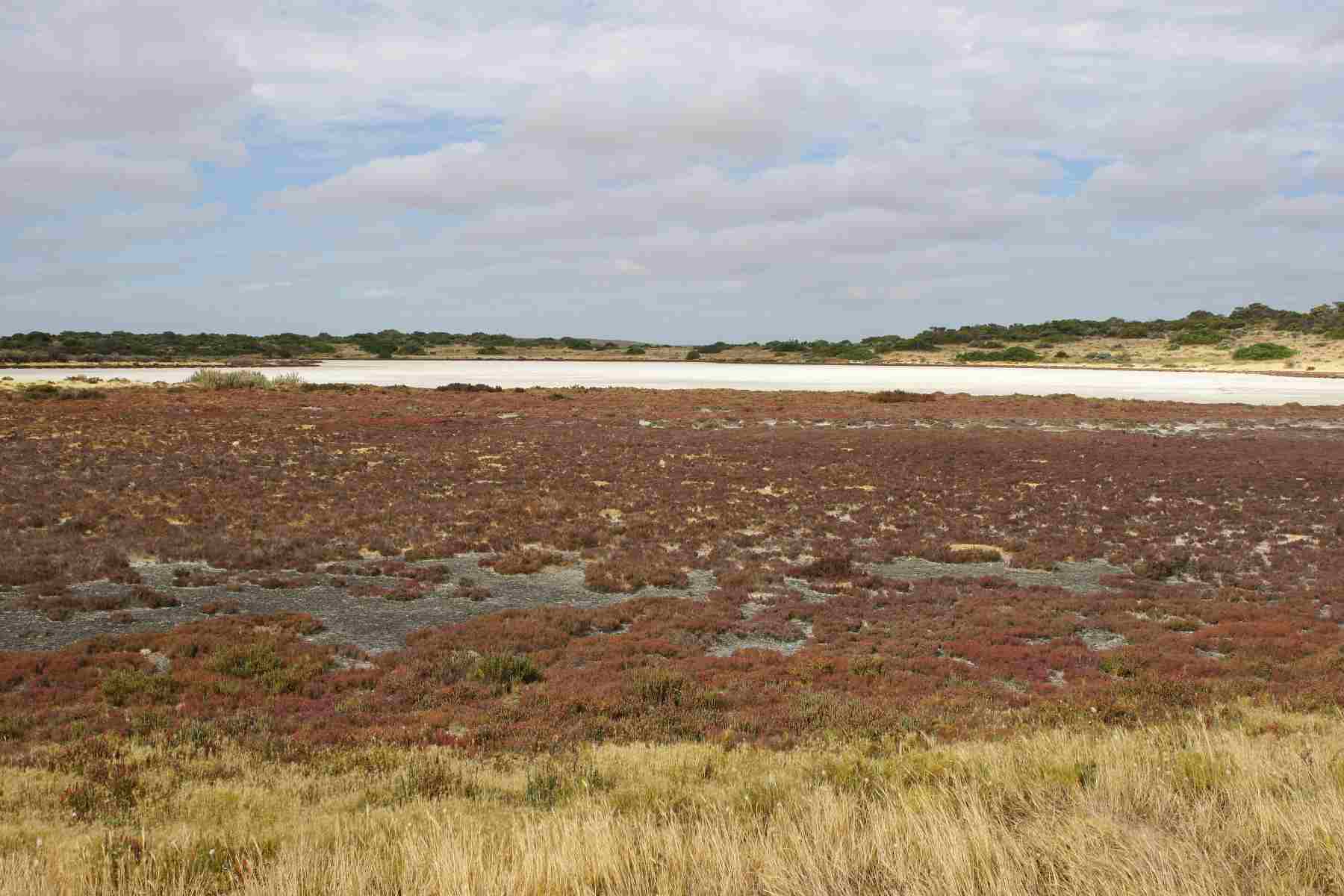
Driving’s one of the best ways to take in the Coorong – everything’s pretty spread out, and having your wheels means you can stop wherever catches your eye.
There are two main routes I prefer to follow, each offering a distinct feel for the landscape.
- Princes Highway – The Coorong Coastal Drive: The Princes Highway stretch from Meningie down through Salt Creek is one of my favourite drives – it’s about 150 km of wide-open skies, shifting dunes, and shimmering lagoons that sit right alongside the road.
This route runs beside Coorong National Park, and for most of the way, you’ll have the wetlands on one side and rolling sand hills on the other.
It’s quiet, scenic, and full of those little roadside pull-ins that make the drive feel like part of the adventure.
There are a few key spots to detour and stretch your legs. Pelican Point, Mark Point, and Parnka Point (also called Hell’s Gate) are all signposted and worth the short turn-off.
At Parnka Point, you’ll see the narrow channel that links the northern and southern lagoons – a vital fish passage and often full of birdlife.
A bit further south, Jacks Point, just 14 km before Salt Creek, is where you’ll find the start of the walk to the pelican observatory – definitely worth a stop if you’re timing it for early morning or late afternoon birdwatching.
For something a bit different, consider taking the unsealed Loop Road for part of the journey.
It runs closer to the lagoon’s edge than the highway, giving you more intimate views of the water and birdlife.
It’s slower going, but worth it if you’re not in a rush – and it links back up with the highway near Chinaman’s Well.
Even if you stay on the main road, the Coorong’s sense of space is incredible.
Some days, you’ll hardly see another car. Salt flats stretch out to the horizon, and it’s not unusual to spot emus or kangaroos by the roadside.
There are a couple of spots to refuel or grab a snack, like the roadhouses at Salt Creek and Policeman’s Point.
If you keep going south, you’ll end up in Kingston SE, where the drive wraps up with a photo next to the giant Big Lobster.
It’s a classic end to a laid-back road trip through one of South Australia’s most underrated landscapes. - Narrung & Lake Albert Loop: The Narrung and Lake Albert Loop is a slower-paced drive that weaves through the heart of the Coorong’s cultural landscape.
Starting from Meningie, head north-east and you’ll hit a series of stops that feel like chapters in a well-worn storybook – full of colour, history, and quiet charm.
Just out of town, the Pink Lake at Ashville is the first one to pull over for. When the season’s right – usually late summer – the water turns a soft bubblegum pink thanks to salt-loving algae called Dunaliella salina.
It’s a quick stop with a small parking area, but the colours can be incredible, especially under a late afternoon sun.
Keep following the road through open farmland until you reach Narrung, where you’ll cross a narrow channel between Lake Albert and Lake Alexandrina on a small cable ferry.
It’s free, runs 24/7, and gives you a few minutes to soak up the stillness.
Watch for pelicans floating in the current or fishers casting off in little boats.
A short gravel detour from here takes you to Raukkan. From there, the road loops back along the shoreline of Lake Alexandrina, with big open views across the water and hardly any traffic.
The whole loop’s about 70 km and easy to do in half a day, but if you stop at every lookout, lake, and cultural site along the way – and you should – it turns into a relaxed full-day trip. - Meningie Lookout: If you’re after a quick spot to take in the view, Meningie Lookout is the one.
Perched on Meningie Hill, it gives you a full 360° sweep over Lake Albert, the town below, and the distant line of dunes marking the edge of the Coorong.
You can either drive up or walk it via the Lions Trail if you’d like to stretch your legs.
It’s a great place to get your bearings – everything clicks into place when you see it from above.
Come around sunset, and the view turns into something else entirely.
The lake catches the light, pelicans drift across in silhouette, and the sky glows gold and pink. It’s quiet, simple, and one of those small-town moments that sticks with you.
Hidden Gems and Quirky Experiences
What makes the Coorong stick with you is the little surprises you find when you’re not even looking.
Beyond the big-name spots, there are a few offbeat gems tucked along the way – the kind of places that add texture to the trip and turn a simple drive into something more.
Keep an eye out for these low-key highlights that often end up being the most memorable parts.
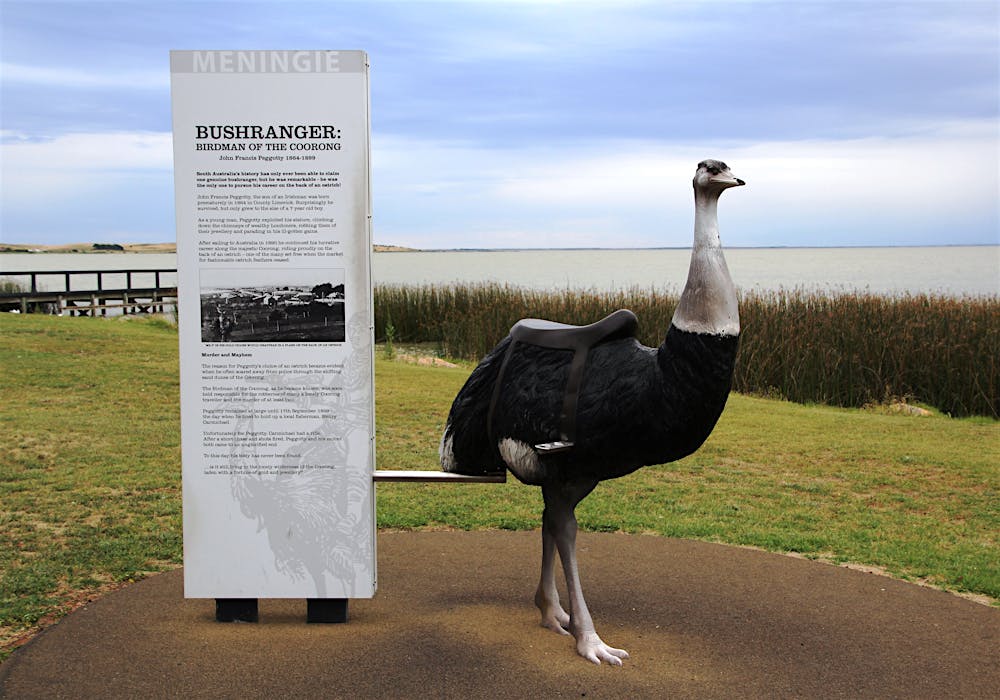
- “Birdman of the Coorong” Legend: Outside the Coorong Cottage craft shop in Meningie, there’s a statue that always makes people stop – an ostrich standing tall and proud.
It’s a nod to one of South Australia’s strangest stories: the legend of the “Birdman of the Coorong.”
Back in the late 1800s, a bushranger named John Francis Peggotty was said to roam the Coorong, robbing travellers and vanishing into the scrub.
What makes the tale so wild is his supposed getaway method – riding a stolen ostrich across the sand dunes.
Peggotty earned his nickname because, according to local legend, he could outrun police by blending in with emus and dashing off on an ostrich brought in during a failed farming scheme.
No one knows what happened to him – he disappeared without a trace – but the story lives on.
Peggotty is said to be South Australia’s only valid bushranger, and the town of Meningie has embraced the mystery.
Stop for a photo with the ostrich, read the plaque, and enjoy a bit of Coorong folklore that’s as quirky as it gets. - Salt Creek Oil Rig Monument: As you pass through the blink-and-you ‘ll-miss-it town of Salt Creek, you’ll spot something unexpected – a timber oil rig sitting beside the highway.
It’s not just roadside art – it marks the site of Australia’s first oil drilling attempt and one of the Coorong’s more curious chapters.
Back in 1866, reports of oily deposits near Salt Creek sparked excitement, and by the early 1900s, hopeful prospectors were drilling wells in search of black gold.
But what they hit wasn’t oil – it was a thick, sticky substance now known as Coorongite, a natural bitumen formed from algae. It wasn’t commercially valuable, and just like that, the oil rush fizzled out.
The rig you see is a replica, standing as a reminder of how close – and how far – they came.
There are signs explaining the story, and it’s right beside the Salt Creek Roadhouse, so it’s an easy place to pull in.
If you’ve got a few extra minutes, wander over to the Historic Well nearby or take the short boardwalk trail from the Salt Creek campground to spot some birdlife. - Flip-Flop Windmill and Other Curiosities: The Coorong’s remoteness has consistently called for a bit of ingenuity – and if you look closely, you’ll find traces of that inventiveness still standing today.
One of the quirkiest examples is the flip-flop windmill near Mark Point.
Unlike the spinning blades you’d usually expect, this one rocks back and forth like a seesaw, using a pendulum-style mechanism to pump water.
It’s a rare bit of bush engineering and is thought to be unique to the region.
Out along the old South Road stock route, you’ll also come across some unexpected relics.
There’s the “Very Good Water” rock, hand-carved to mark a reliable waterhole – practical and oddly poetic.
Further into the scrub near Tea Tree Crossing, a small gravesite marks the resting place of Jane McNicol, a murder victim from 1862.
It’s a quiet, unsettling reminder of how tough and lawless life could be out here in the early days.
These places aren’t flashy, and most aren’t signposted – you’ll need a sense of adventure (and sometimes a 4WD) to track them down.
Even just reading about them in local brochures from the Meningie Visitor Centre adds another layer to your trip.
Final Thoughts
The Coorong has a way of surprising you. One moment you’re watching pelicans glide over the water, the next you’re wandering through scrubland to a forgotten gold rush well.
Then, just as the sun drops, you’re tucking into fresh-caught mullet with the lake glowing gold in front of you.
It’s not flashy or polished, and that’s exactly why it sticks with you.
This place brings together so much in one stretch of countryside – rich culture, raw landscapes, quiet wildlife moments, and the kind of small-town charm that makes you feel welcome from the start.
By the time you leave, you’ll get why people say life’s better by the lake. The Coorong isn’t just a destination – it’s a mood, a pace, and a place that lingers.
